
The Complete U.S. Pricing Guide
Let’s be honest — painting the outside of your home is one of those projects that sounds simple until you actually start pricing it out.
You get one quote and think, “That can’t be right.” Then you get two more quotes and realize the first one was actually in the ballpark.
Exterior painting costs in the U.S. vary wildly depending on where you live, what your house is made of, how big it is, and whether it’s in good shape to begin with. A number you read on one website may not apply to your home at all.
This guide gives you the real numbers — broken down by home size, siding material, region, and labor type. We also cover everything else connected to the cost: prep work, paint quality, DIY vs. professional, and when a fresh coat of paint is the smartest exterior home upgrade you can make.
Whether you’re planning a full exterior home remodel or just refreshing the color before listing your house, you’ll know exactly what to budget after reading this.
What Is the Average Cost to Paint the Exterior of a Home?
The national average cost to paint the exterior of a home in runs between $3,000 and $8,500 for a professionally painted single-family home. That wide range exists because no two homes are identical.

Here’s the simplified breakdown most homeowners use as a starting point:
| Home Size | Square Footage | Avg. Professional Cost |
| Small Home | Under 1,500 sq ft | $1,500 – $3,200 |
| Medium Home | 1,500 – 2,500 sq ft | $3,200 – $5,800 |
| Large Home | 2,500 – 4,000 sq ft | $5,800 – $9,500 |
| Very Large Home | 4,000+ sq ft | $9,500 – $16,000+ |
These figures reflect labor and materials for a standard two-coat exterior paint job in average condition. Homes in poor condition or made from specialty materials will fall on the higher end.
Pro Tip: Always get a minimum of three written quotes before committing to a painter. Pricing in this industry varies significantly — sometimes by thousands of dollars — for the same scope of work.
Cost Per Square Foot to Paint Home Exterior
Most professional painters in the U.S. price exterior paint jobs by square footage of paintable surface — not the total square footage of your home.
Here’s the difference: a 2,000 sq ft home has roughly 1,500 to 2,200 sq ft of paintable exterior wall surface, depending on the number of stories, window area, and trim detail.

| Service Type | Cost Per Sq Ft (Paintable Surface) |
| Labor only (you supply paint) | $0.80 – $1.80 |
| Labor + standard paint | $1.50 – $3.00 |
| Labor + premium paint | $2.50 – $4.50 |
| Labor + primer + two coats | $3.00 – $5.50 |
| Full prep + prime + two coats | $4.00 – $7.00+ |
Always ask your contractor whether their quote is based on the floor plan square footage or the actual paintable surface area. The difference matters — and it’s a common source of confusion.
7 Factors That Directly Affect the Cost to Paint Exterior of Home
Price differences between two homes of similar size can be dramatic. These seven factors explain why.
1. Siding Material
Your exterior home materials play a huge role in how much prep work the job requires — and how much paint it absorbs.
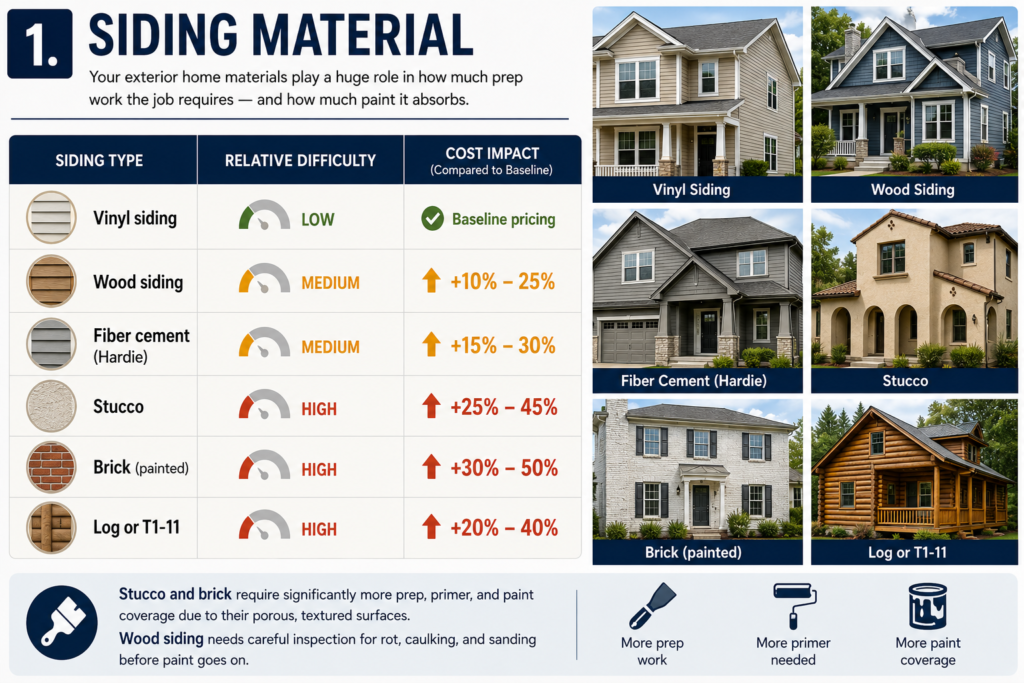
| Siding Type | Relative Difficulty | Cost Impact |
| Vinyl siding | Low | Baseline pricing |
| Wood siding | Medium | +10% – 25% |
| Fiber cement (Hardie) | Medium | +15% – 30% |
| Stucco | High | +25% – 45% |
| Brick (painted) | High | +30% – 50% |
| Log or T1-11 | High | +20% – 40% |
Stucco and brick require significantly more prep, primer, and paint coverage due to their porous, textured surfaces. Wood siding needs careful inspection for rot, caulking, and sanding before paint goes on.
2. Current Condition of the Exterior
A home in good condition — clean siding, no peeling paint, solid caulk — costs far less to paint than a home that needs significant prep work.
Prep costs to factor in:
• Power washing: $150 – $400
• Scraping loose or peeling paint: $200 – $800+
• Sanding and feathering old paint edges: $100 – $300
• Caulking windows, doors, and trim: $150 – $400
• Priming bare wood or repaired areas: $200 – $500
• Wood rot repair before painting: $300 – $2,000+ depending on extent
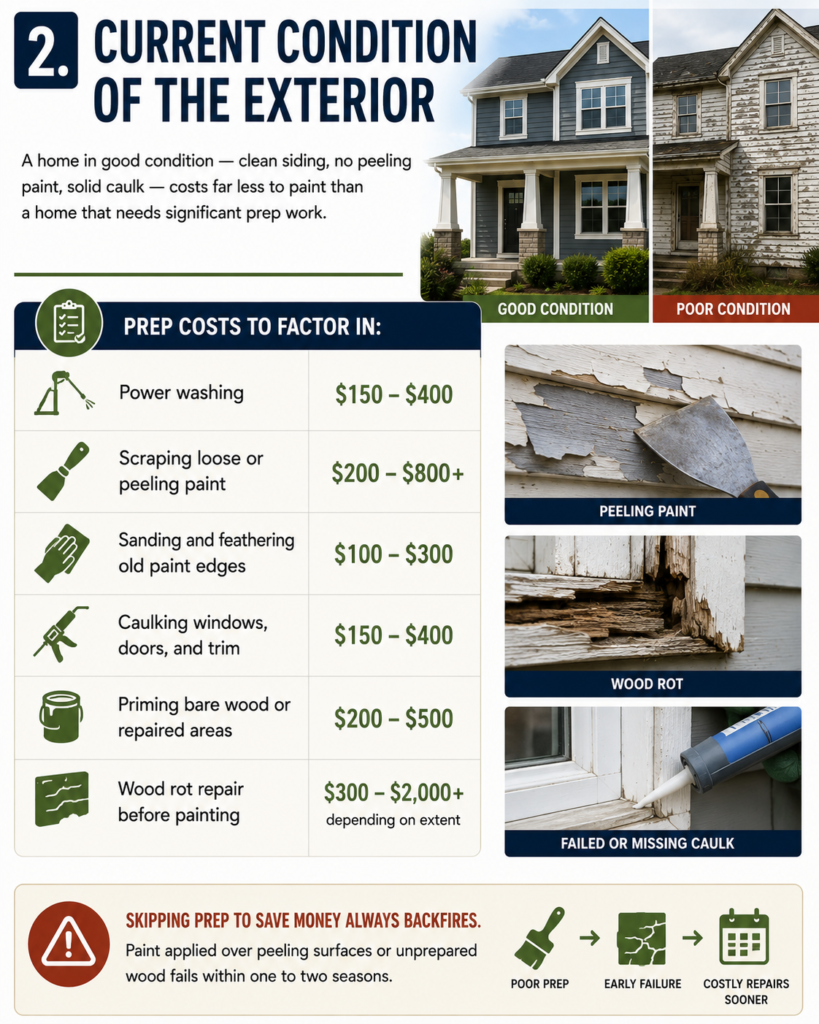
Skipping prep to save money always backfires. Paint applied over peeling surfaces or unprepared wood fails within one to two seasons.
3. Number of Stories
Single-story homes are the simplest to paint. The moment a job goes above one story, painters need additional equipment and safety setup.
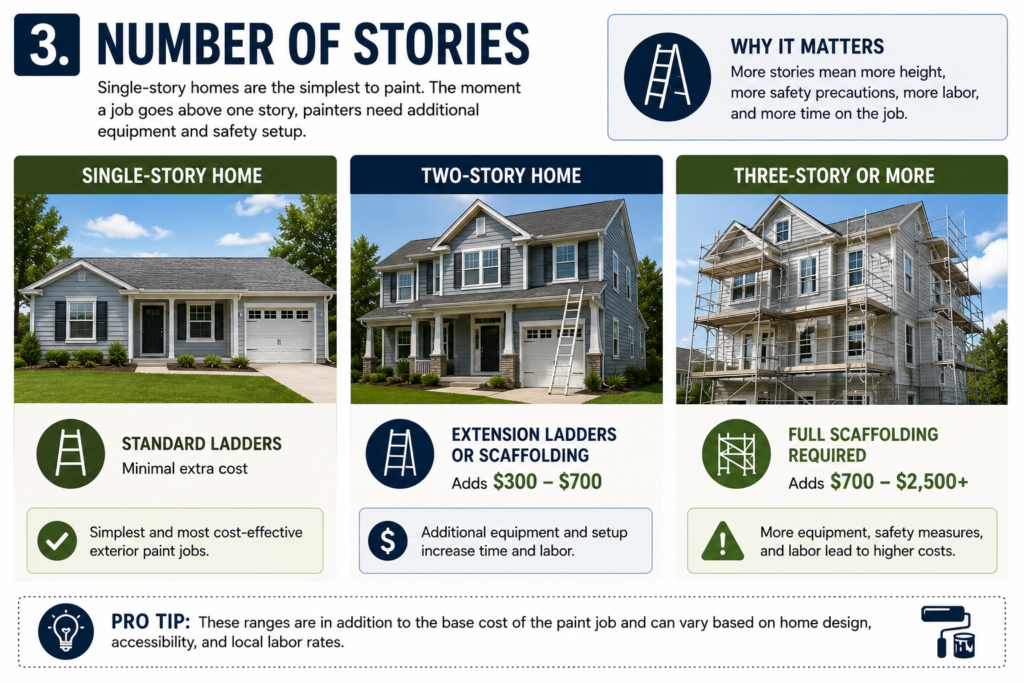
• Single-story home: standard ladders, minimal extra cost
• Two-story home: extension ladders or scaffolding — adds $300 – $700
• Three-story or more: full scaffolding required — adds $700 – $2,500+
4. Number of Colors and Trim Complexity
A single-color exterior with minimal trim is the most affordable option. Every additional color and every piece of detailed trim adds time to the job.
• One body color + one trim color: baseline
• Two body colors + accent trim: add $300 – $600
• Complex Victorian or craftsman home exterior trim detail: add $500 – $1,500+
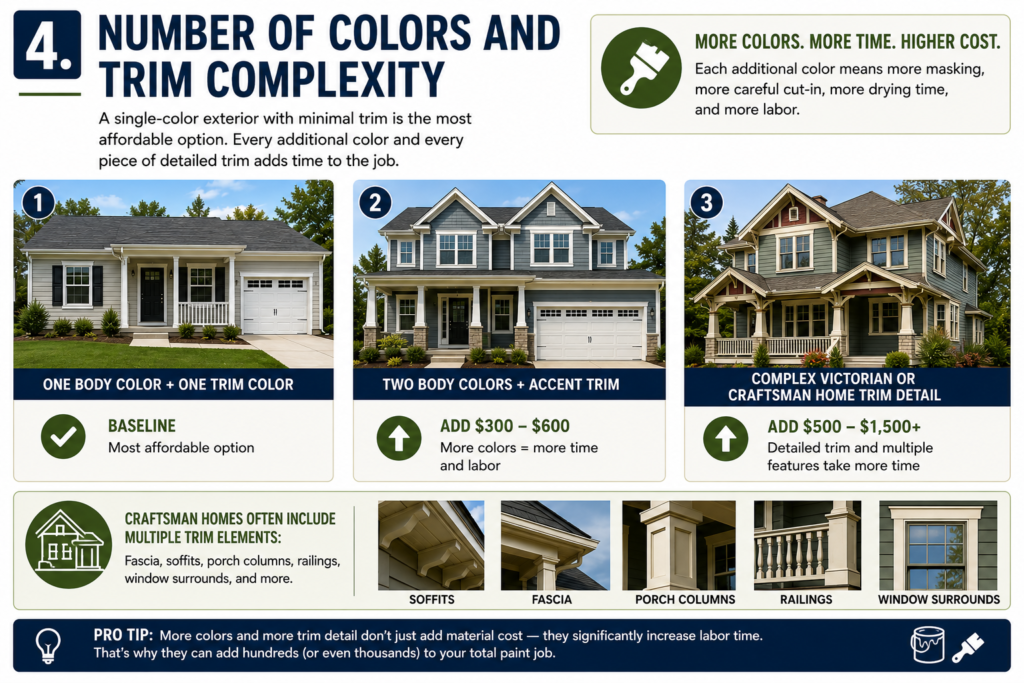
Craftsman home exterior styles, in particular, often feature multiple trim elements — fascia, soffits, porch columns, railings, and window surrounds — all of which require careful cut-in work and extra time.
5. Geographic Region and Local Labor Rates
Labor rates in the U.S. vary dramatically. Painting a 2,000 sq ft home in a rural Midwest town will cost thousands less than the same job in San Francisco or New York City.
| Region | Labor Cost Index (vs. National Avg.) |
| Northeast (NYC, Boston, DC) | +30% – 50% above average |
| West Coast (LA, SF, Seattle) | +25% – 45% above average |
| Southwest (Phoenix, Dallas) | Near average or slightly below |
| Midwest (Chicago, Indianapolis) | Near average |
| Southeast (Atlanta, Charlotte) | 5% – 15% below average |
| Rural areas (all regions) | 15% – 35% below average |
6. Paint Quality
Not all exterior paint is equal. Using the cheapest paint on the shelf might save you $200 upfront but cost you another paint job in four years instead of twelve.
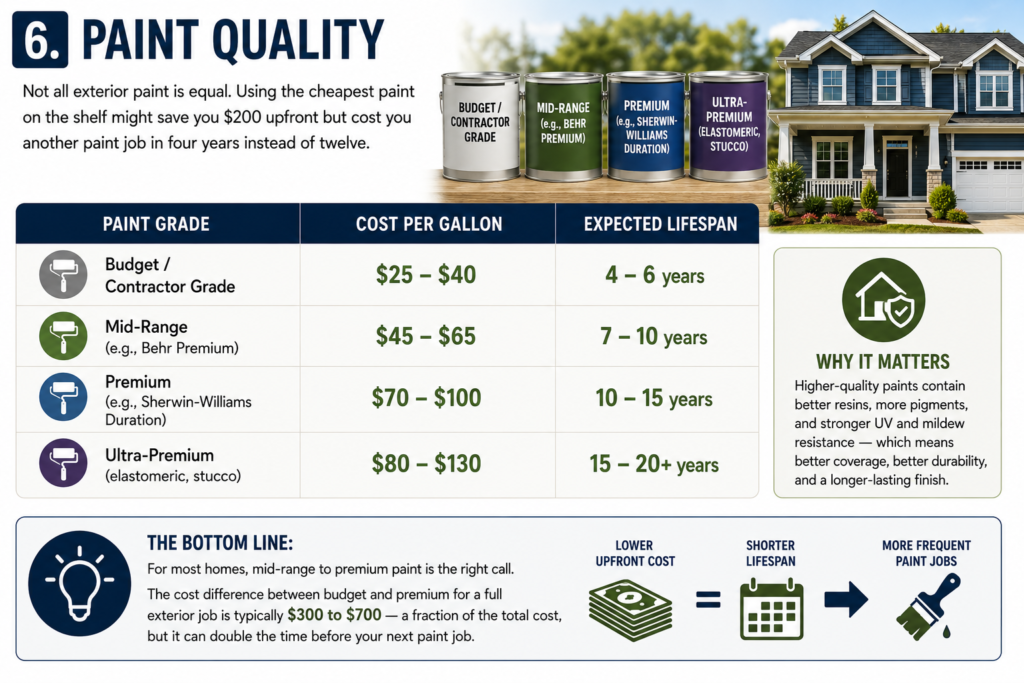
| Paint Grade | Cost Per Gallon | Expected Lifespan |
| Budget / Contractor Grade | $25 – $40 | 4 – 6 years |
| Mid-Range (e.g., Behr Premium) | $45 – $65 | 7 – 10 years |
| Premium (e.g., Sherwin-Williams Duration) | $70 – $100 | 10 – 15 years |
| Ultra-Premium (elastomeric, stucco) | $80 – $130 | 15 – 20+ years |
For most homes, mid-range to premium paint is the right call. The cost difference between budget and premium for a full exterior job is typically $300 to $700 — a fraction of the total cost, but it can double the time before your next paint job.
7. Time of Year
Most exterior paint jobs happen in spring and fall when temperatures stay between 50°F and 85°F. Summer and winter bring scheduling challenges.
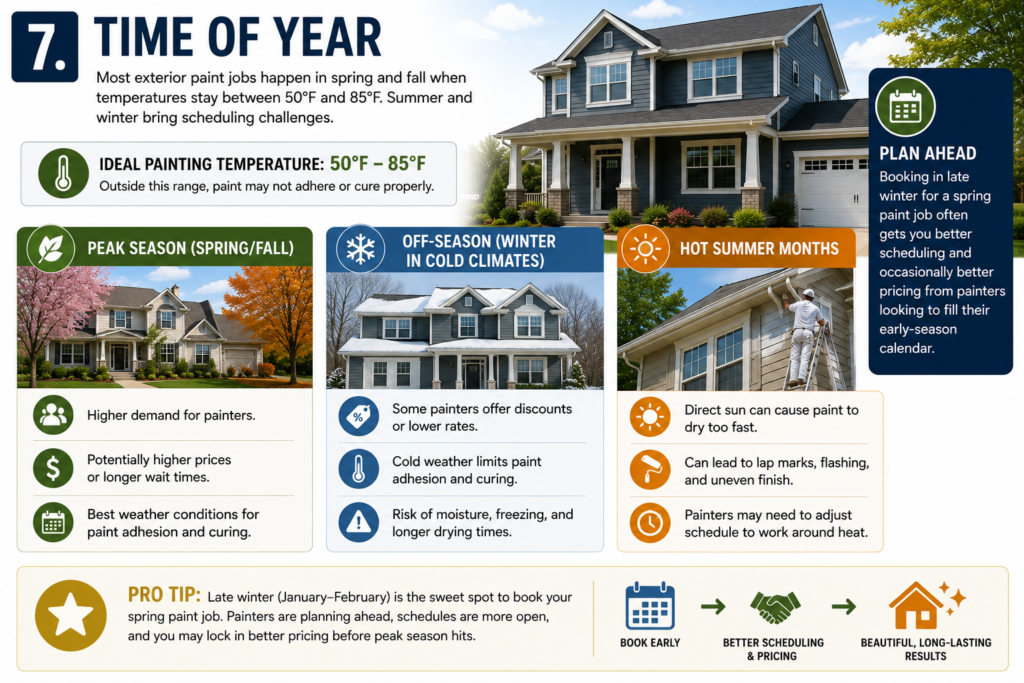
• Peak season (spring/fall): higher demand, potentially higher prices or longer wait times
• Off-season (winter in cold climates): some painters offer discounts, but cold weather limits quality
• Hot summer months: direct sun can cause paint to dry too fast, creating lap marks
Booking in late winter for a spring paint job often gets you better scheduling and occasionally better pricing from painters looking to fill their early-season calendar.
DIY vs. Professional Exterior Painting: The Real Cost Comparison
A lot of homeowners assume DIY painting is always cheaper. Sometimes it is. But the full picture is more nuanced.

| Cost Item | DIY Cost | Professional Cost |
| Paint (2 coats, 2,000 sq ft home) | $400 – $700 | Included in quote |
| Primer | $100 – $200 | Included |
| Brushes, rollers, trays | $80 – $150 | Included |
| Painter’s tape and drop cloths | $40 – $80 | Included |
| Ladder rental or scaffolding | $150 – $600 | Included |
| Power washer rental | $60 – $150/day | Included |
| Your time (40–80 hours of labor) | Not accounted for | N/A |
| TOTAL ESTIMATE | $830 – $1,880 | $3,000 – $8,500 |
On the surface, DIY looks dramatically cheaper. But factor in your time — 40 to 80 hours for an average home — and the equation shifts fast. If your hourly time is worth $30, that’s $1,200 to $2,400 in labor value that the DIY price doesn’t capture.
DIY exterior painting makes the most sense when:
• Your home is single-story with simple siding
• The existing paint is in good condition (minimal prep)
• You have prior painting experience or are a patient beginner
• You can dedicate multiple weekends without rushing the job
Hire a professional when:
• Your home is two stories or higher
• The exterior needs significant prep — scraping, caulking, rot repair
• You want a warranty on the work
• You simply don’t have the time
How to Paint Home Exterior: The Step-by-Step Process
Whether you hire a pro or do it yourself, understanding the proper process helps you evaluate quotes and spot shortcuts that could hurt the final result.

1. Clean the surface thoroughly. Power wash the entire exterior and let it dry completely — typically 24 to 48 hours.
2. Inspect and repair. Check for peeling paint, wood rot, cracked caulk, and damaged siding. Address all of these before any paint goes on.
3. Scrape and sand. Remove all loose or peeling paint. Sand edges smooth so the new paint doesn’t bridge over the old.
4. Caulk all gaps. Seal around windows, doors, trim, and any penetrations in the siding.
5. Prime bare areas. Apply primer to any bare wood, repaired areas, or surfaces switching to a dramatically different color.
6. Mask and protect. Cover windows, doors, lights, and landscaping with painter’s tape and drop cloths.
7. Apply first coat. Work from top to bottom — soffits and fascia first, then siding, then trim.
8. Apply second coat. Allow adequate dry time between coats — usually 4 to 6 hours for latex paint.
9. Clean up and inspect. Walk the entire perimeter and touch up any missed spots or thin areas.
“Lap marks” — visible lines where wet and dry paint meet — are one of the most common DIY mistakes. Always maintain a wet edge by working in sections and moving quickly enough that you’re always blending into wet paint.
Choosing the Right Exterior Paint Color: Where to Start
Use an Exterior Home Paint Visualizer First
Before you buy a single drop of paint, use an exterior home paint visualizer. These free tools let you upload a photo of your house and try different color combinations digitally.
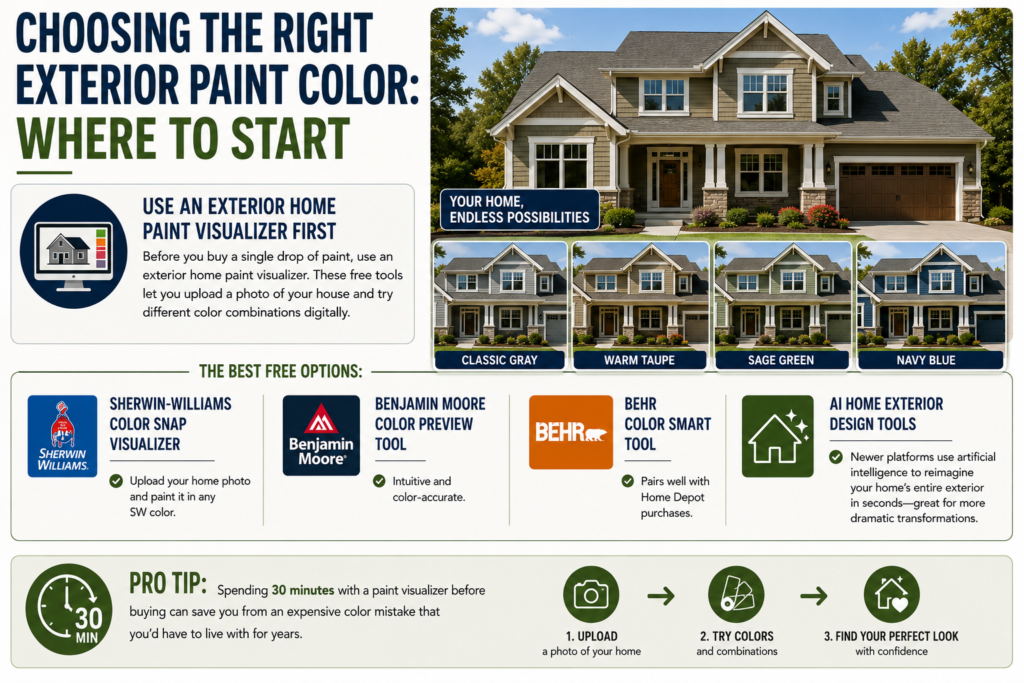
The best free options:
• Sherwin-Williams ColorSnap Visualizer — upload your home photo and paint it in any SW color
• Benjamin Moore Color Preview Tool — intuitive and color-accurate
• Behr Color Smart Tool — pairs well with Home Depot purchases
• AI home exterior design tools — newer platforms use artificial intelligence to reimagine your home’s entire exterior in seconds, which is great for more dramatic transformations
Spending 30 minutes with a paint visualizer before buying can save you from an expensive color mistake that you’d have to live with for years.
Popular Exterior Color Directions for 2025
• Gray home exterior — still one of the most searched and used palettes. Works with virtually every architectural style.
• Deep navy or black — high contrast, modern, and trending strongly for both modern home exterior and craftsman home exterior styles.
• Warm white and cream — timeless, clean, and adds perceived square footage to smaller homes.
• Sage green and earthy tones — growing in popularity as homeowners move away from cool grays.
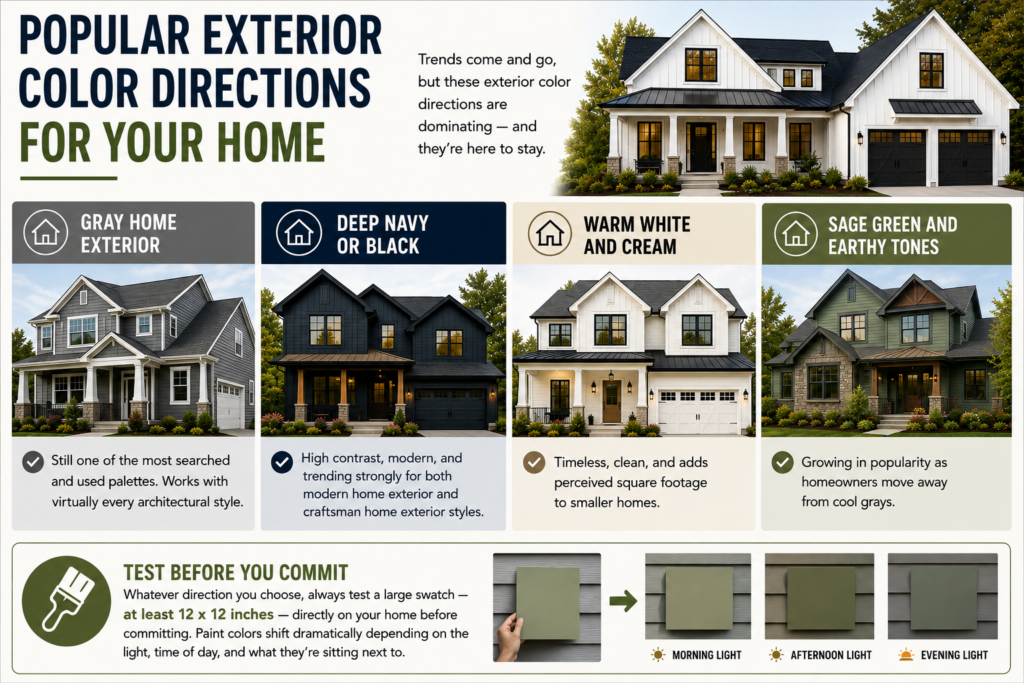
Whatever direction you choose, always test a large swatch — at least 12 x 12 inches — directly on your home before committing. Paint colors shift dramatically depending on the light, time of day, and what they’re sitting next to.
When Painting Isn’t Enough: Exterior Home Remodel Alternatives
Sometimes a fresh coat of paint is the right move. Other times, the underlying siding is too far gone and painting over it just delays the inevitable.
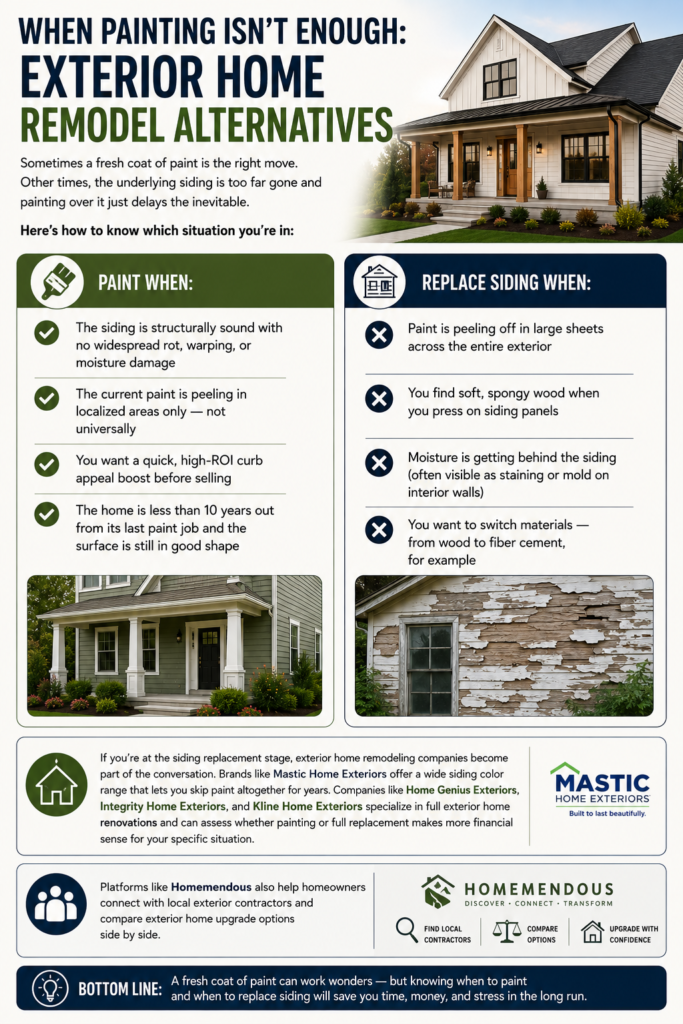
Paint When:
• The siding is structurally sound with no widespread rot, warping, or moisture damage
• The current paint is peeling in localized areas only — not universally
• You want a quick, high-ROI curb appeal boost before selling
• The home is less than 10 years out from its last paint job and the surface is still in good shape
Replace Siding When:
• Paint is peeling off in large sheets across the entire exterior
• You find soft, spongy wood when you press on siding panels
• Moisture is getting behind the siding (often visible as staining or mold on interior walls)
• You want to switch materials — from wood to fiber cement, for example
If you’re at the siding replacement stage, exterior home remodeling companies become part of the conversation. Brands like Mastic Home Exteriors offer a wide siding color range that lets you skip paint altogether for years. Companies like Home Genius Exteriors, Integrity Home Exteriors, and Kline Home Exteriors specialize in full exterior home renovations and can assess whether painting or full replacement makes more financial sense for your specific situation.
Platforms like Homemendous also help homeowners connect with local exterior contractors and compare exterior home upgrade options side by side.
Special Situations: Mobile Homes, Split-Levels, and Small Houses
Painting a Mobile Home Exterior
Mobile home exterior painting follows different rules than site-built homes. The surface — often aluminum or vinyl — requires specific primers and paints designed to bond to metal or factory-coated surfaces.

• Always use a bonding primer on aluminum mobile home siding
• Acrylic latex paint works best for vinyl surfaces
• Avoid oil-based paints on mobile home exteriors — they get brittle over time and crack
• Budget $800 – $2,500 for professional painting on most mobile homes
Updating mobile home exterior doors at the same time as a paint job gives the biggest bang-for-buck visual impact.
How to Modernize a Split Level Home Exterior With Paint
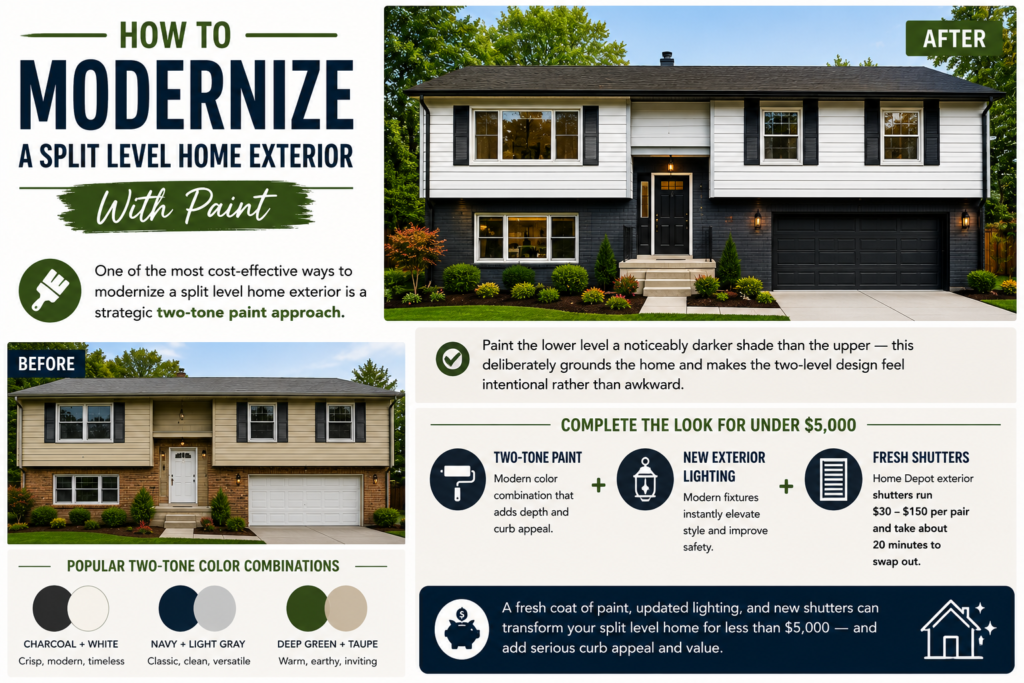
One of the most cost-effective ways to modernize a split level home exterior is a strategic two-tone paint approach. Paint the lower level a noticeably darker shade than the upper — this deliberately grounds the home and makes the two-level design feel intentional rather than awkward.
Pair the updated paint color with new exterior home lighting fixtures and fresh shutters (Home Depot exterior shutters run $30 – $150 per pair and take about 20 minutes to swap out) for a full exterior refresh under $5,000.