
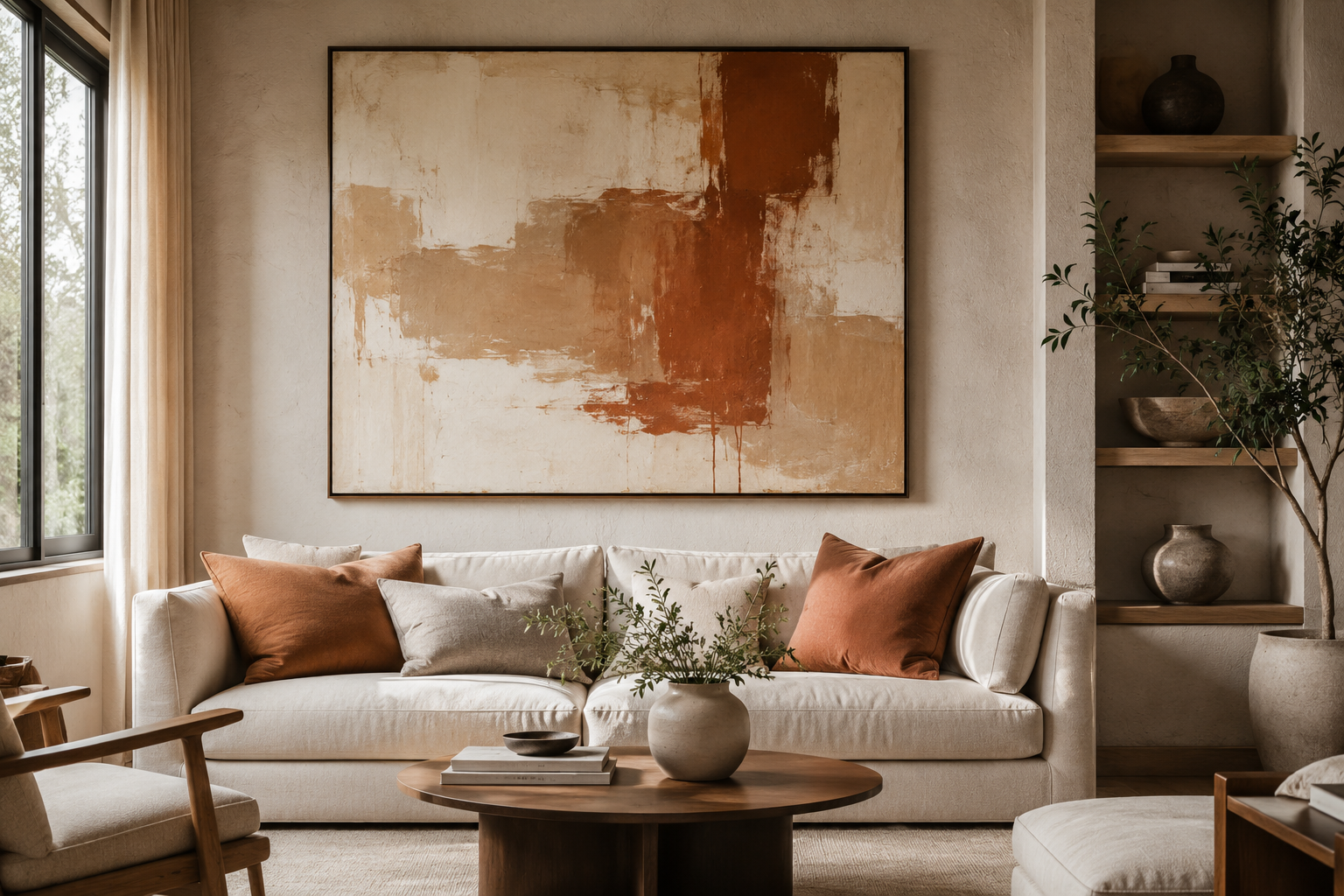
If you’ve ever stood in the middle of a freshly painted living room and felt like something was still missing, you already know the answer: bare walls. You can have the perfect sofa, the right rug, and flawless lighting, but a home doesn’t feel finished until there’s art on the walls. Wall art ideas are some of the most searched home decor topics in the U.S. right now, and for good reason — the right painting can turn an ordinary room into a space that actually feels like you. In this guide, we’ll walk through the biggest wall art and painting trends of 2026, how to pick the right piece for every room in your house, and the small styling mistakes that quietly hold a room back.
Why Wall Art Matters More Than You Think
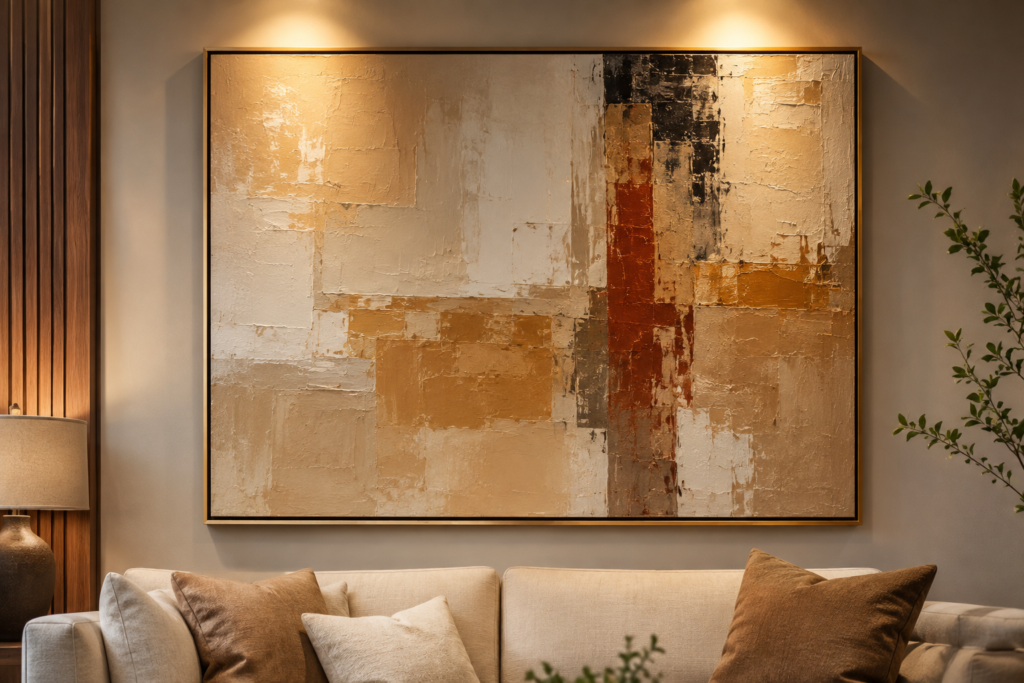
It’s easy to treat wall art as an afterthought — something you grab on a weekend Target run once the furniture is already in place. But art does more heavy lifting in a room than almost anything else you’ll buy. A single painting can set the color palette for an entire space, soften hard architectural lines, and give your eye somewhere to land the moment you walk in. In home improvement circles, designers often call this the ‘focal point rule’: every well-designed room has one thing that draws attention first, and more often than not, that thing is a piece of art. Skip it, and even a beautifully furnished room can feel flat, unfinished, or strangely impersonal.
Top Wall Art and Painting Trends for Modern Homes
Home decor trends shift every year, a clear direction: warmth, texture, and individuality. Interior designers are steering homeowners away from stark, cold minimalism and toward pieces that feel personal and lived-in. Here are the styles leading the way.
Warm Neutral Abstract Paintings
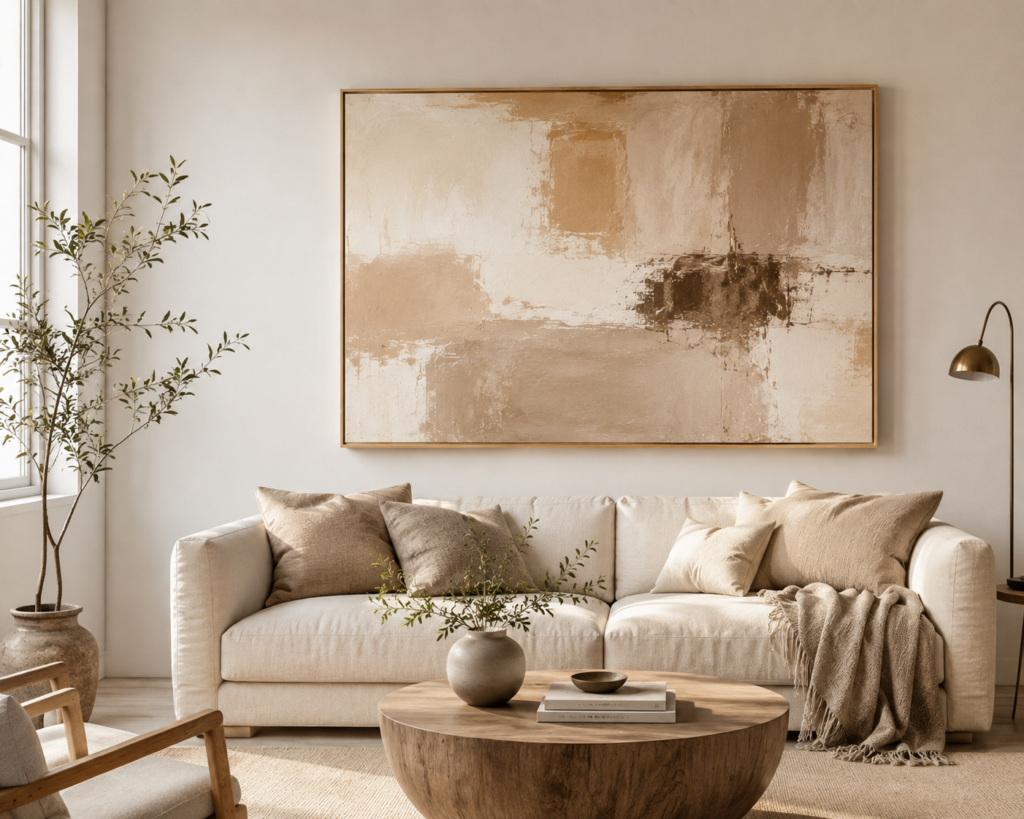
Gray-on-gray minimalism is on its way out, and warm neutral abstract art is taking its place. Think soft beige, sand, taupe, and warm cream tones layered with gentle brushstrokes. These paintings work almost anywhere because they don’t compete with your existing furniture — they simply enhance it. If you want a painting for your living room that will still look right in five years, a warm neutral abstract is one of the safest, most timeless choices you can make.
Oversized Statement Art

Instead of filling a wall with a handful of small frames, more homeowners are choosing one large, dramatic painting and letting it do all the talking. An oversized canvas above the sofa, the bed, or the dining table instantly becomes the room’s focal point, and it tends to make ceilings feel taller and spaces feel more intentional. If your home has that half-finished look no matter how much furniture you add, one bold statement piece is often the missing ingredient.
Textured Canvas and Palette Knife Art
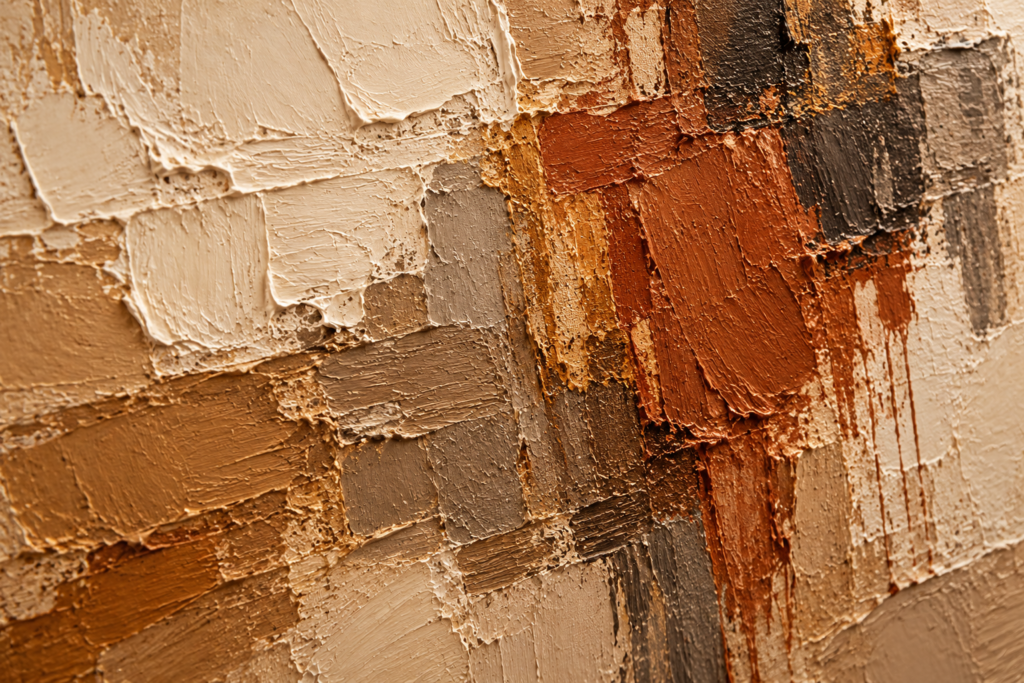
Flat, glossy prints are giving way to art you can practically feel with your eyes. Palette knife paintings, heavy-texture canvases, and mixed-media pieces add real depth to a wall, especially when natural or lamp lighting hits them at an angle. This trend pairs beautifully with the current wave of organic, tactile interiors — think linen upholstery, raw wood furniture, and woven textiles.
Nature-Inspired and Biophilic Paintings

Bringing the outdoors in remains one of the most consistent themes in home decor, and 2026 pushes it further with what designers are calling biophilic art — loose, organic paintings of leaves, branches, water, and landscapes that feel calm rather than literal. These pieces are especially popular in bedrooms and home offices, where the goal is relaxation and focus rather than bold visual impact.
How to Choose the Right Painting for Every Room
Not every painting belongs in every room. The best home decor choices take into account how a space is actually used, not just how it looks in a photo.
Living Room Wall Art
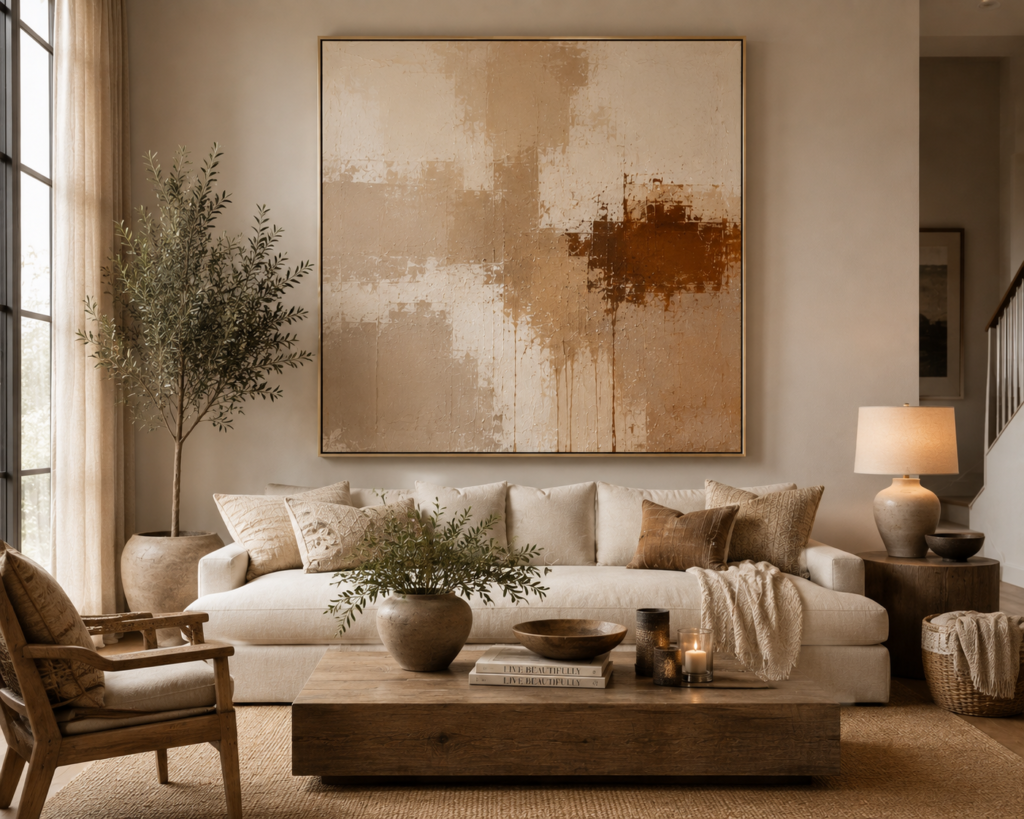
This is usually the room where guests spend the most time, so it can handle bolder choices — abstract art, oversized canvases, or a curated gallery wall above the sofa. A common styling rule is to choose a piece (or grouping) that spans about two-thirds the width of the furniture below it.
Bedroom Wall Art

Bedrooms call for softer energy. Nature scenes, muted abstracts, and calming color palettes work better here than anything too vibrant or busy. The goal is a space that helps you unwind, not one that competes with your ability to fall asleep.
Kitchen and Dining Room Art
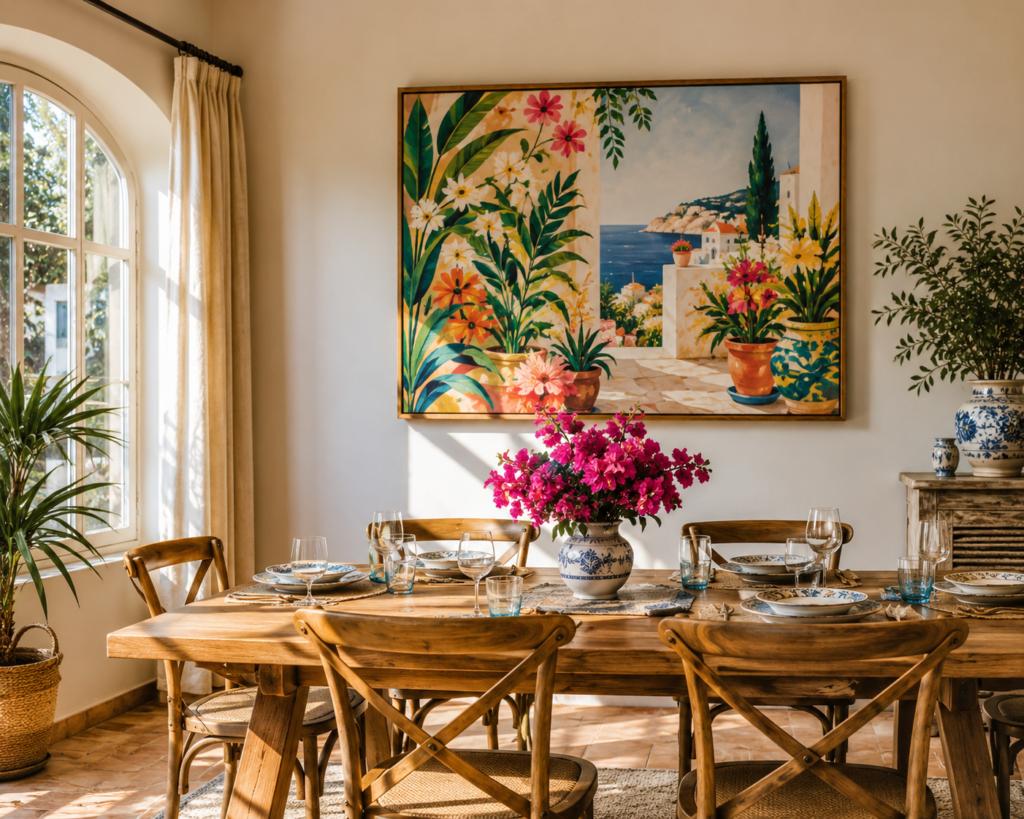
Kitchens and dining spaces can take on more personality and color. Warm, sun-soaked scenes, botanical prints, or even playful abstract pieces bring energy to a room built around gathering and conversation.
Home Office Art

For a home office, choose art that supports focus rather than distraction. Simple abstracts, architectural line art, or a single grounding landscape tend to work better than busy, high-contrast pieces.
Color Palettes That Complement Any Interior Style
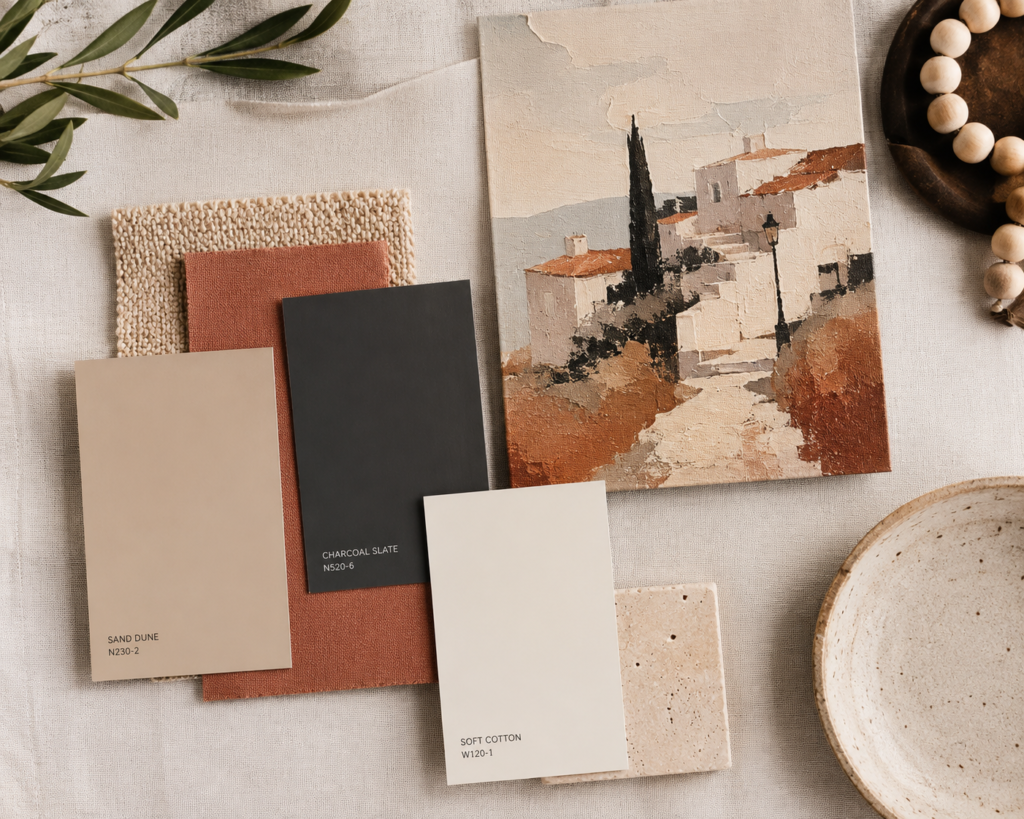
One of the easiest ways to choose wall art without overthinking it is to work from your existing color palette instead of fighting it. Warm neutral homes pair beautifully with earthy abstracts in cream, terracotta, and soft brown. Cooler, modern spaces often lean toward charcoal, deep blue, or black-and-white paintings for contrast. If your home already has a lot of color from furniture and textiles, a more neutral painting can act as a visual breather rather than adding to the noise.
Gallery Wall or Statement Piece? How to Decide
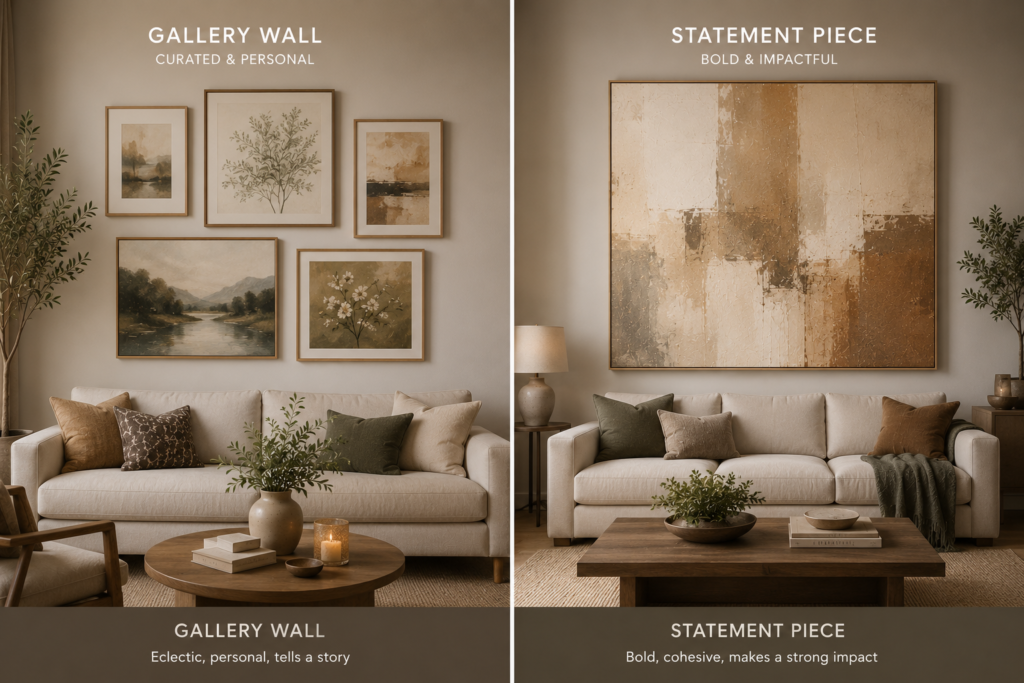
This is one of the most common home decor questions, and the honest answer is: it depends on the wall. Large, uninterrupted walls — like the space above a sofa or bed — usually look best with one oversized painting rather than several small ones, which can read as cluttered from across the room. Smaller or awkwardly shaped walls, like stairwells or hallways, are where gallery walls genuinely shine, since they let you mix sizes and frames to fill the space naturally. As a general guide, a gallery wall works best with three, five, or seven pieces, using consistent spacing of two to three inches between frames for a clean, intentional look.
Practical Tips for Hanging Wall Art Like a Pro
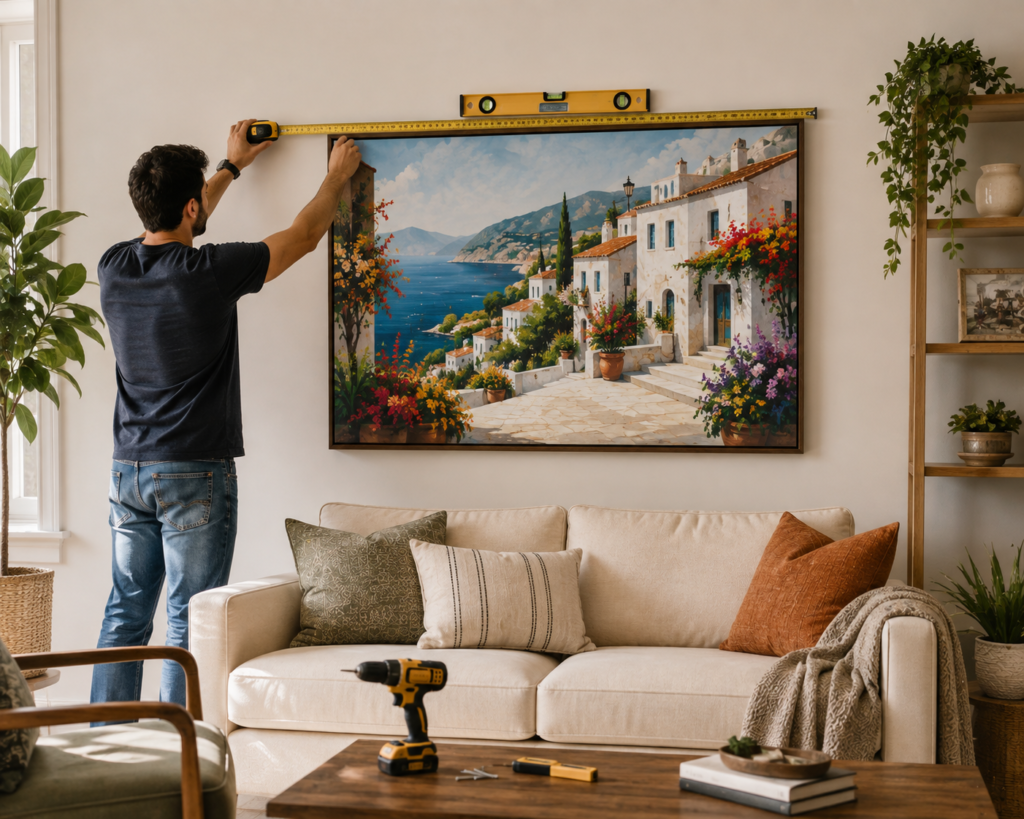
- Hang art so the center sits roughly at eye level, about 57 to 60 inches from the floor.
- Above furniture, leave 6 to 12 inches between the top of the piece (like a sofa or console) and the bottom of the frame.
- For large statement paintings, aim for roughly two-thirds the width of the furniture beneath it.
- Before hammering anything, tape paper templates to the wall to preview spacing and layout.
- Use proper wall anchors for heavier canvases — a nail alone often isn’t enough for oversized pieces.
Common Decorating Mistakes to Avoid
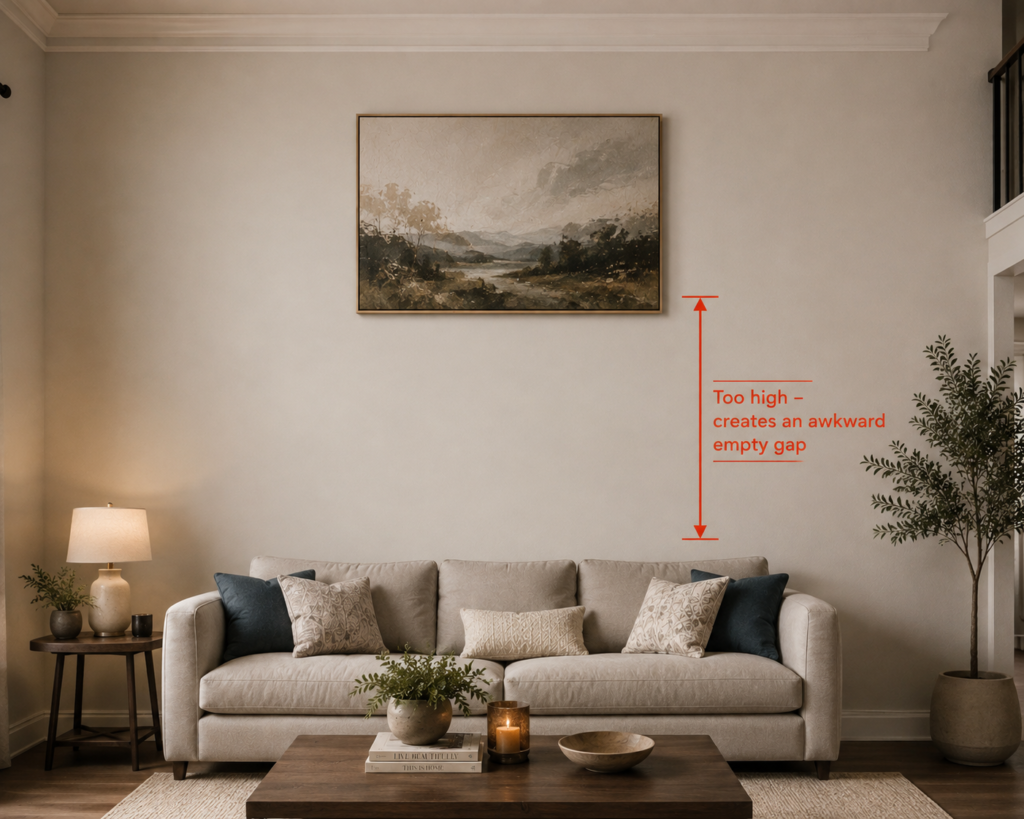
A few small missteps show up again and again in home decor projects. Hanging art too high is probably the most common — it’s a natural instinct, but it almost always throws off the room’s proportions. Choosing pieces that are too small for the wall is another frequent issue; when in doubt, sizing up usually looks better than sizing down. It’s also worth resisting the urge to match art too literally to your sofa or rug color. A painting that echoes your palette without matching it exactly tends to feel far more curated and far less staged.
Frequently Asked Questions
What size painting should I buy for my living room?
As a general rule, aim for a piece that covers about two-thirds the width of the furniture it hangs above. For a standard 7-foot sofa, that usually means a painting somewhere between 48 and 60 inches wide, either as one large canvas or as a tightly grouped set.
Is it okay to mix different painting styles in one home?
Yes, as long as there’s a common thread tying them together — usually color palette, frame style, or a shared mood. A home doesn’t need every room to match perfectly, but it should feel like one continuous story as you move through it.
How much should I budget for wall art?
This varies widely, but a good starting point is treating art as roughly 5 to 10 percent of your total room budget. Original paintings and hand-textured canvases cost more than prints, but they also tend to hold their visual impact — and their value — far longer.
Final Thoughts
Wall art isn’t just decoration — it’s one of the fastest, most affordable ways to make a house feel like a home. Whether you’re drawn to warm neutral abstracts, an oversized statement painting, or a softer nature-inspired piece, the goal is the same: choose art that reflects how you actually want a room to feel. Start with the space that bothers you most, pick one piece you genuinely love, and build the rest of your home decor around it. The walls that felt empty for months might just become your favorite part of the room.