
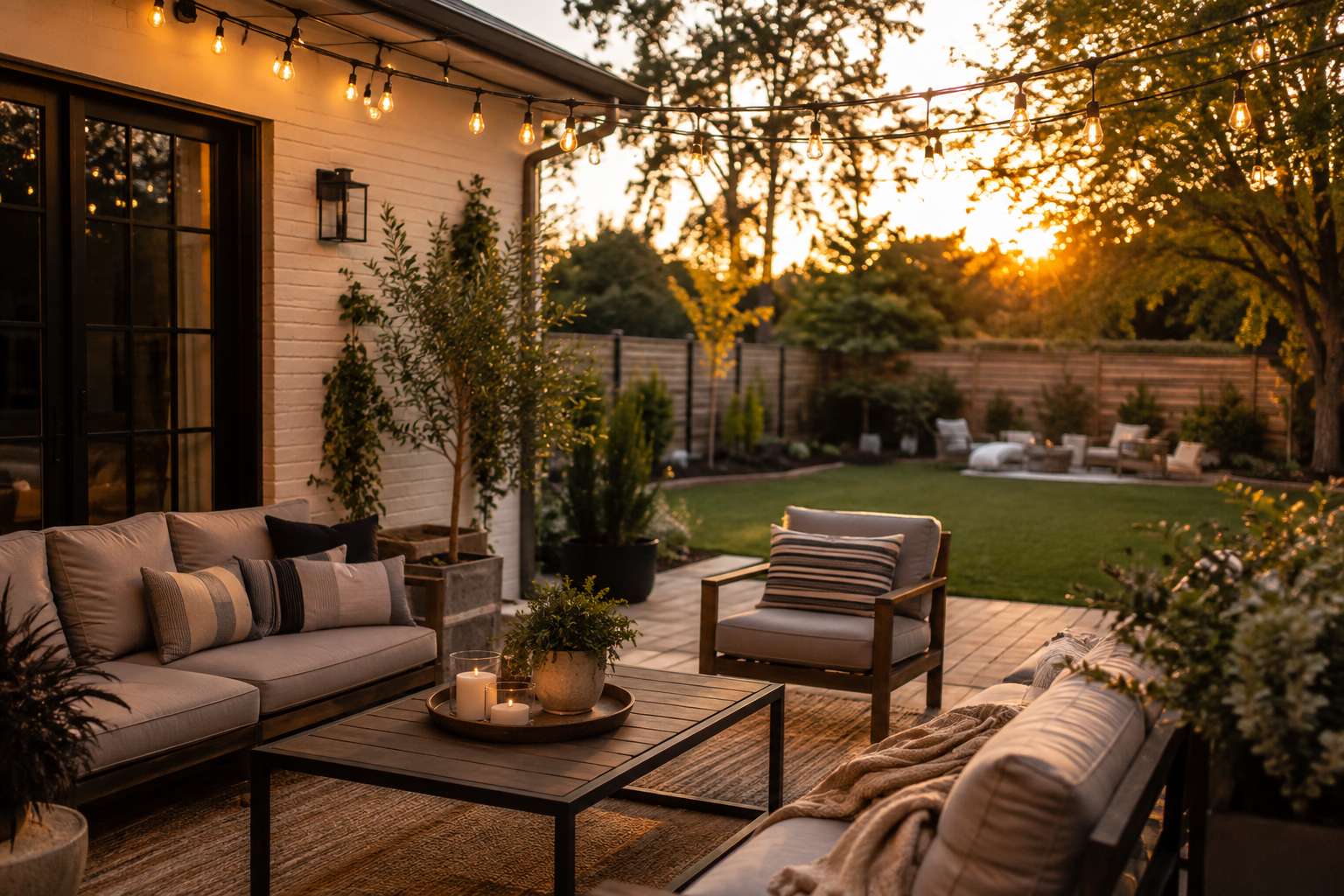
There’s a reason outdoor living rooms have gone from a luxury feature to one of the most requested home upgrades across the US. A backyard patio or deck stops being just a place to grill and starts feeling like an actual extension of your home, somewhere you actually want to spend your evenings, host friends, or just sit with a cup of coffee in the morning.
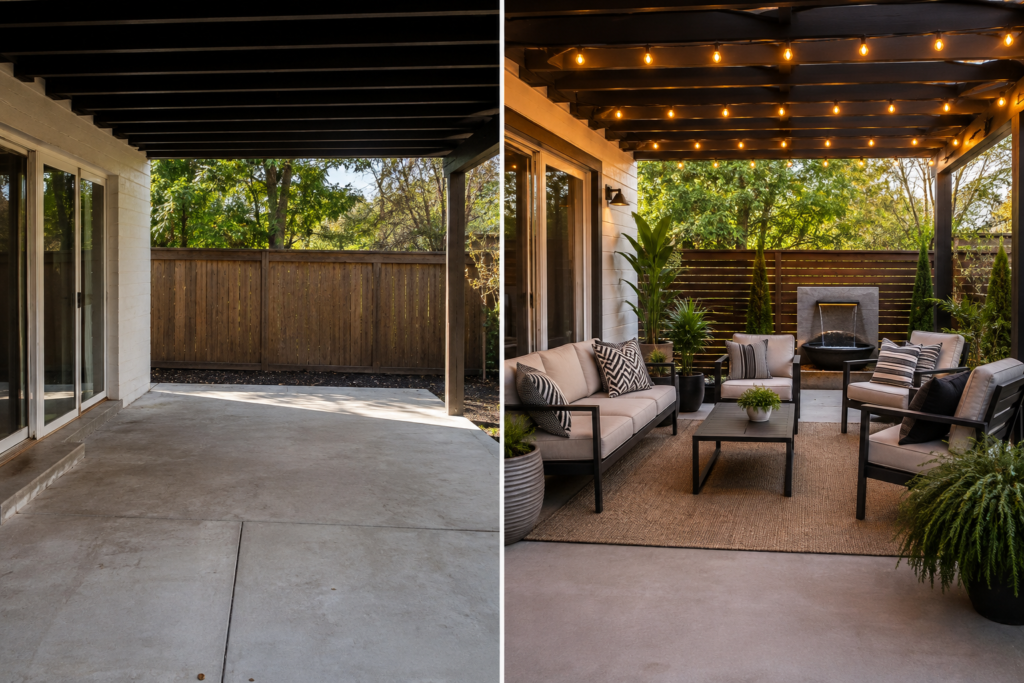
Turning an outdoor space into a true outdoor room doesn’t have to mean a massive renovation budget. With the right layout, furniture, and a few thoughtful touches, almost any patio, deck, or backyard corner can become a comfortable, functional living space. This guide walks through exactly how to plan, design, and furnish an outdoor room that holds up through every season.
What Exactly Is an Outdoor Room?
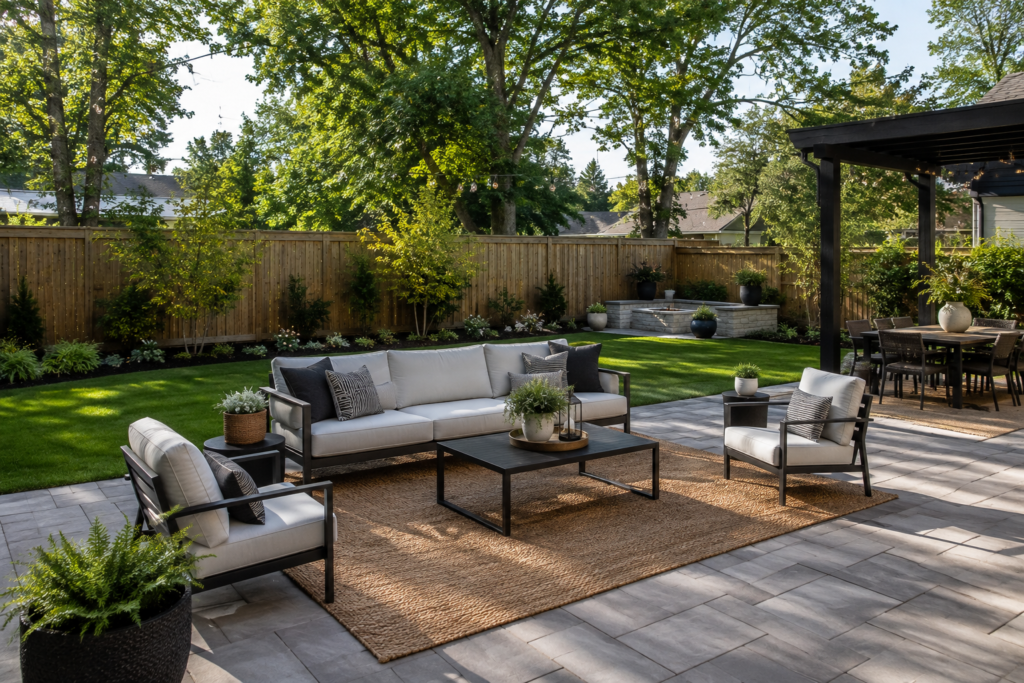
An outdoor room is simply an exterior space designed with the same intention as an indoor one, defined boundaries, comfortable seating, purposeful lighting, and a clear function, whether that’s lounging, dining, or entertaining. The difference between a patio with a few chairs scattered on it and a true outdoor living room usually comes down to layout and planning rather than budget.
Choosing the Right Location for Your Outdoor Room
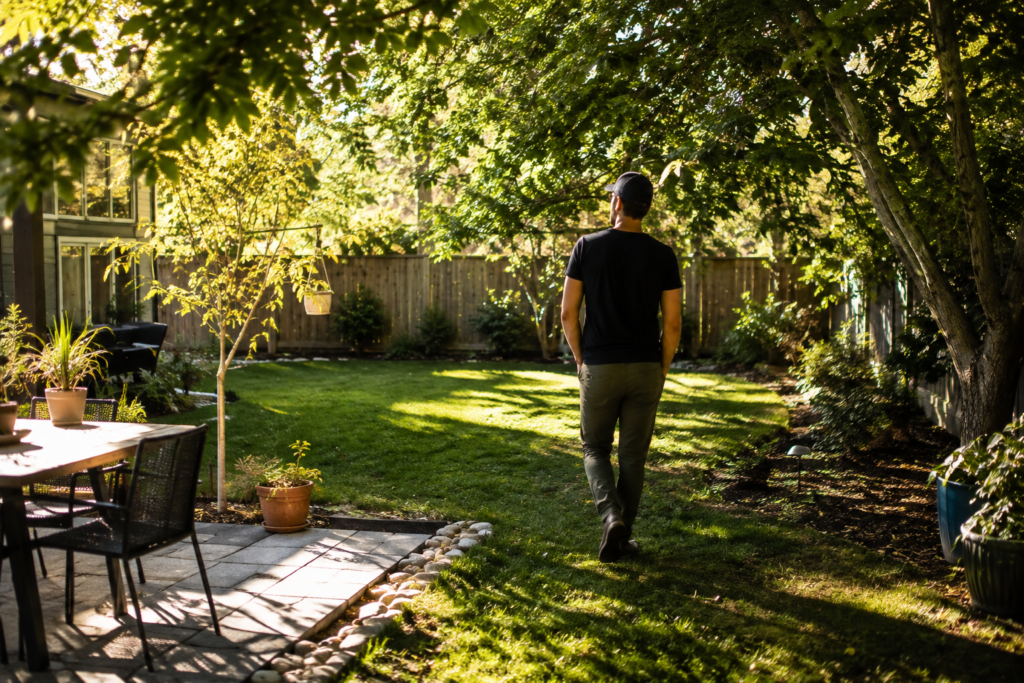
Before buying furniture or picking out a rug, take a walk around your property at different times of day. Notice where the shade falls in the afternoon, which areas catch a breeze, and which spots have the best view of the yard or garden. The most successful outdoor rooms are usually placed where people naturally already gather, near a back door, adjacent to the kitchen, or tucked into a quiet corner away from street noise.
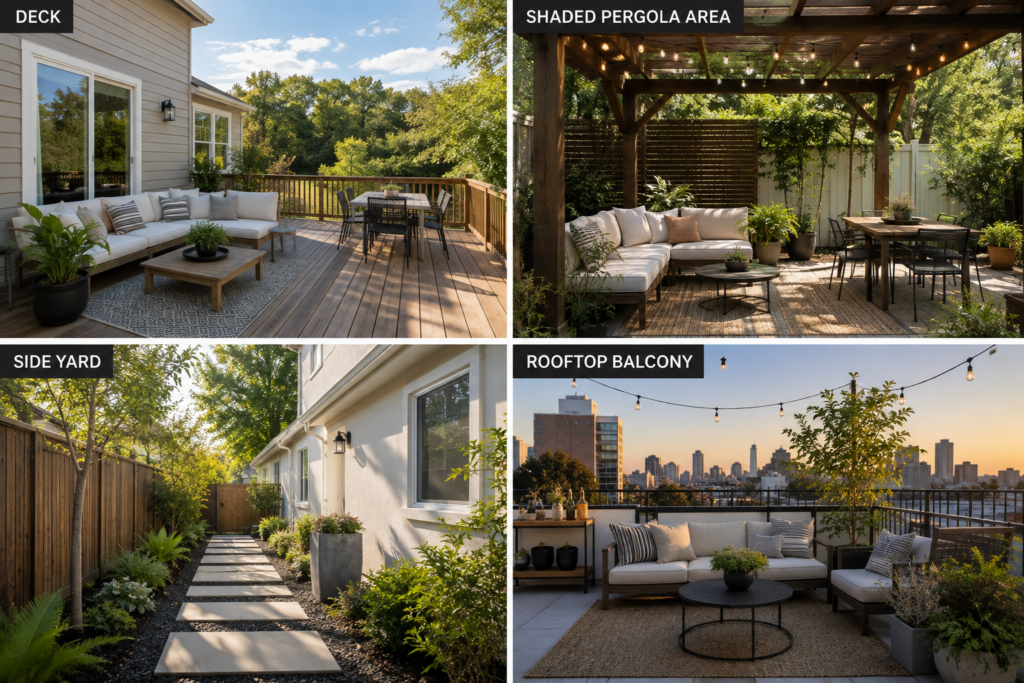
- Existing patios or decks (the easiest and cheapest starting point)
- A shaded area under mature trees or a pergola
- A side yard or side patio that’s often underused
- A rooftop or balcony space in urban homes
Defining the Space Like an Actual Room
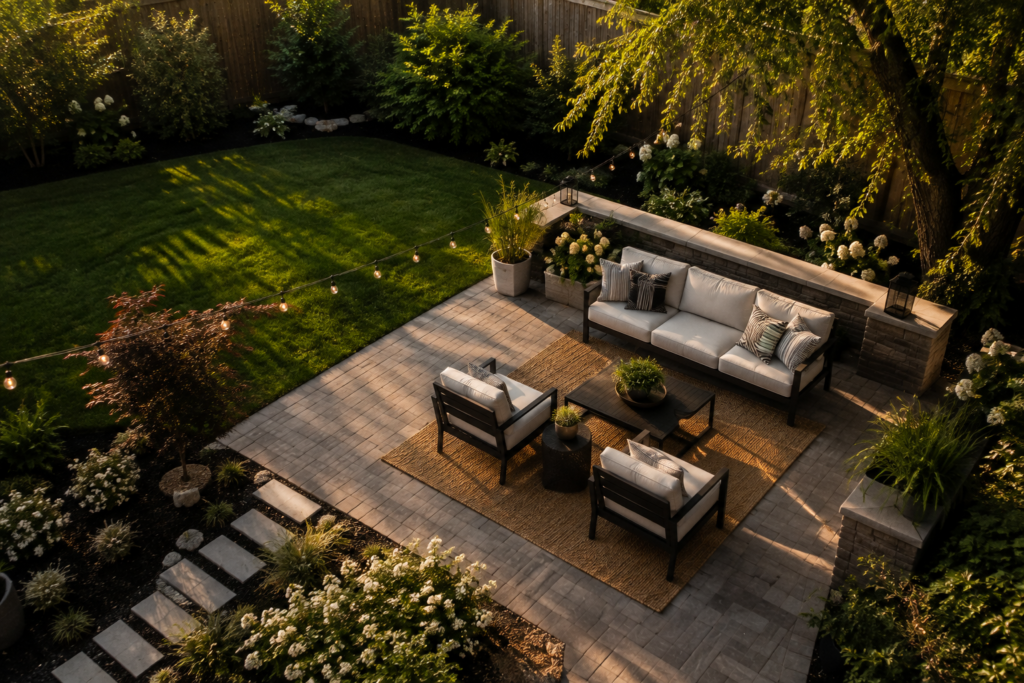
Indoor rooms have walls to define their edges, but outdoor rooms need to create that same sense of boundary in other ways. This is one of the biggest factors that separates a space that feels like a real room from one that feels like leftover yard.
Use Furniture to Anchor the Layout
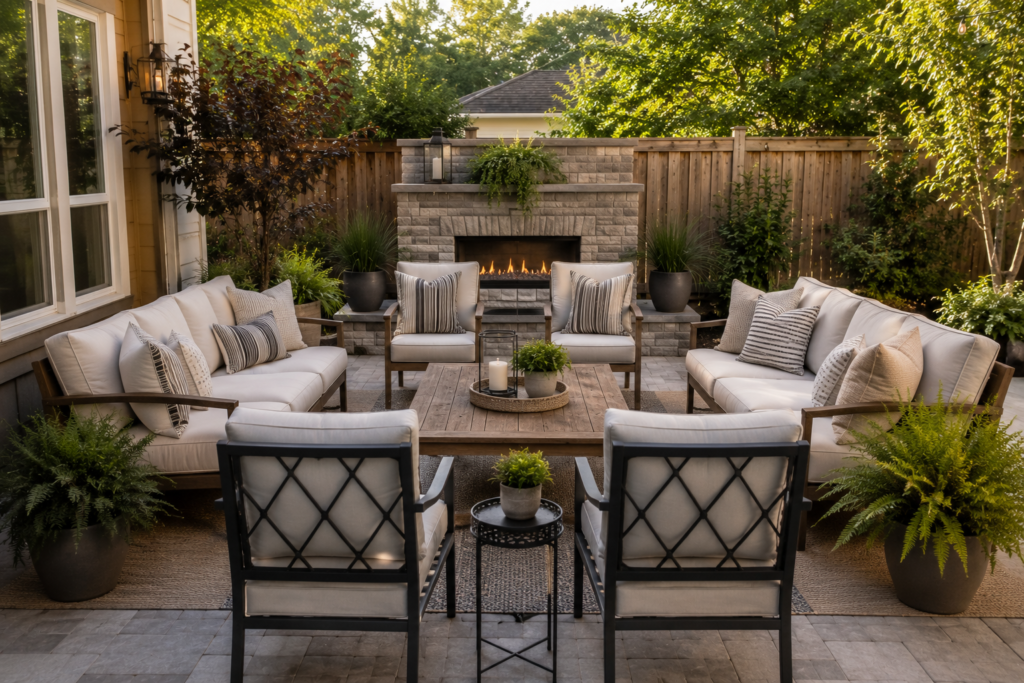
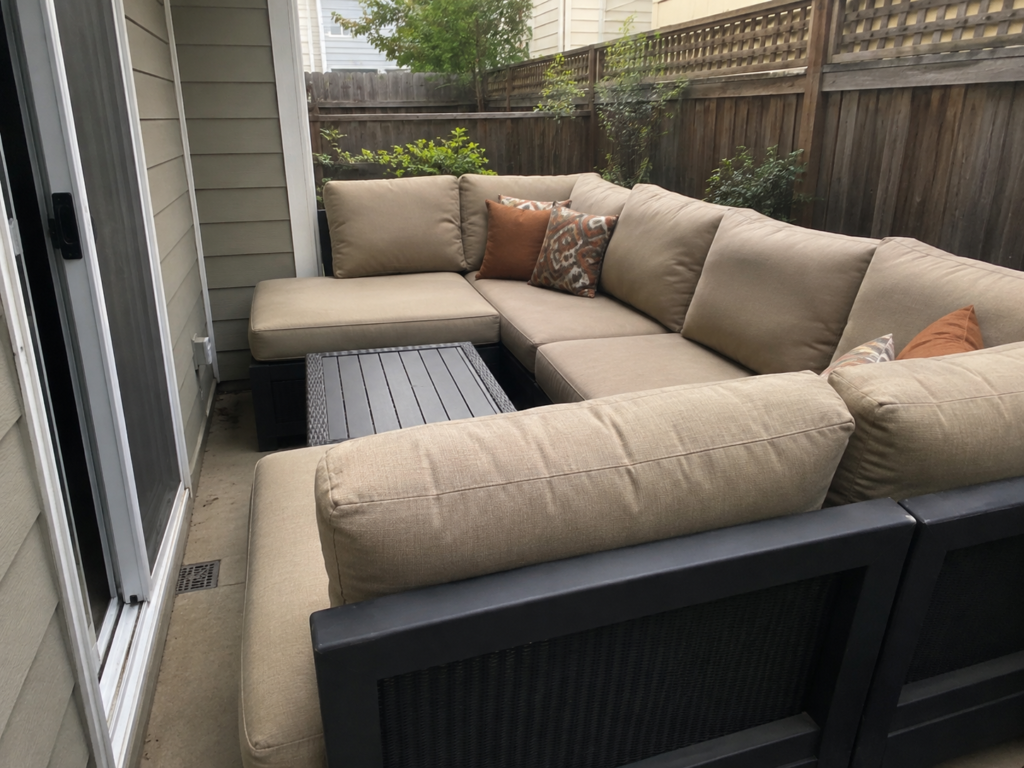
Arrange seating the way you would in a living room, facing inward toward a central point like a coffee table or fire pit, rather than lining chairs up against a wall. This single change makes an outdoor space feel intentional rather than incidental.
Add Vertical Elements
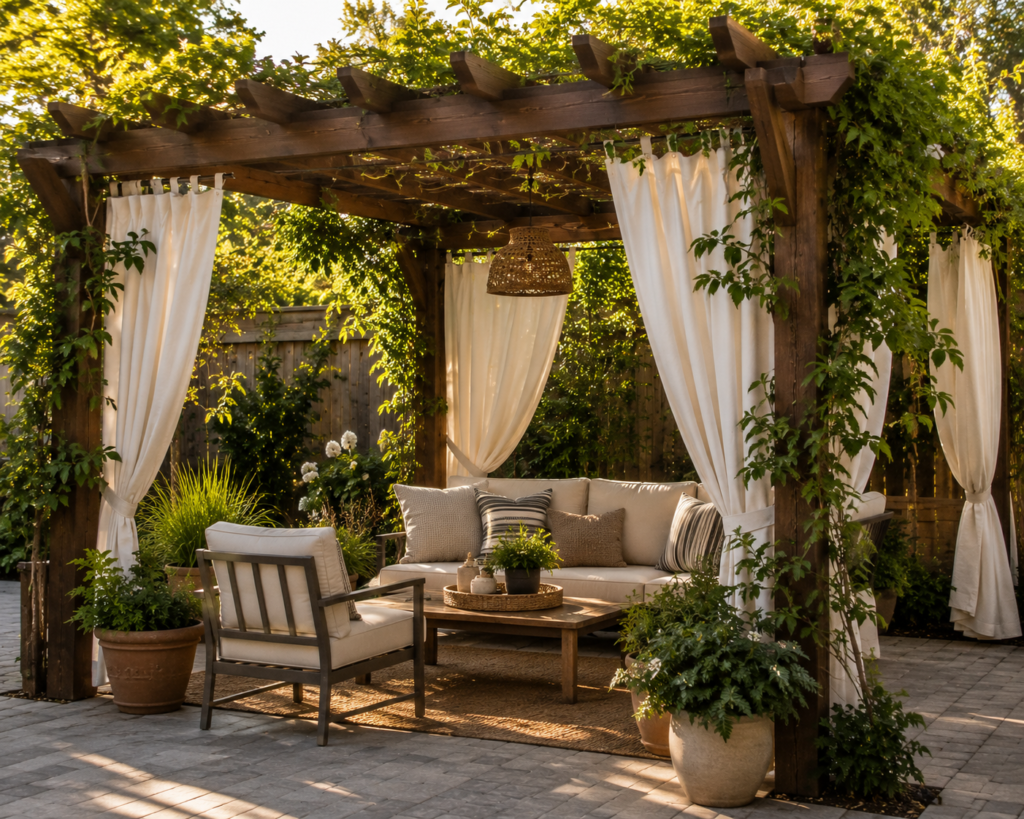
Pergolas, tall planters, outdoor curtains, or even a simple lattice screen give an outdoor room a sense of enclosure without fully closing it in. Vertical elements also help block wind, filter harsh sun, and add privacy from neighbors.
Ground the Space With a Rug or Flooring
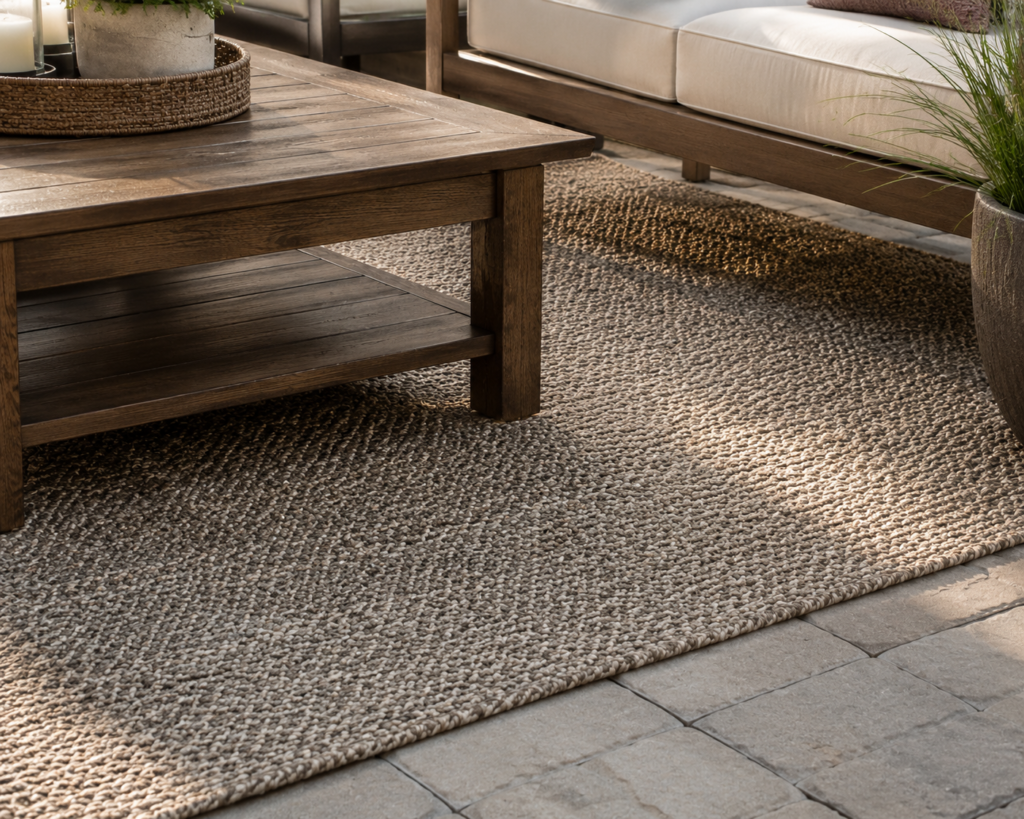
An outdoor rug instantly defines a seating area and makes the whole space feel more finished. Look for rugs made specifically for outdoor use, since they’re designed to handle moisture and UV exposure without fading or mildewing.
Furniture That Actually Holds Up Outdoors
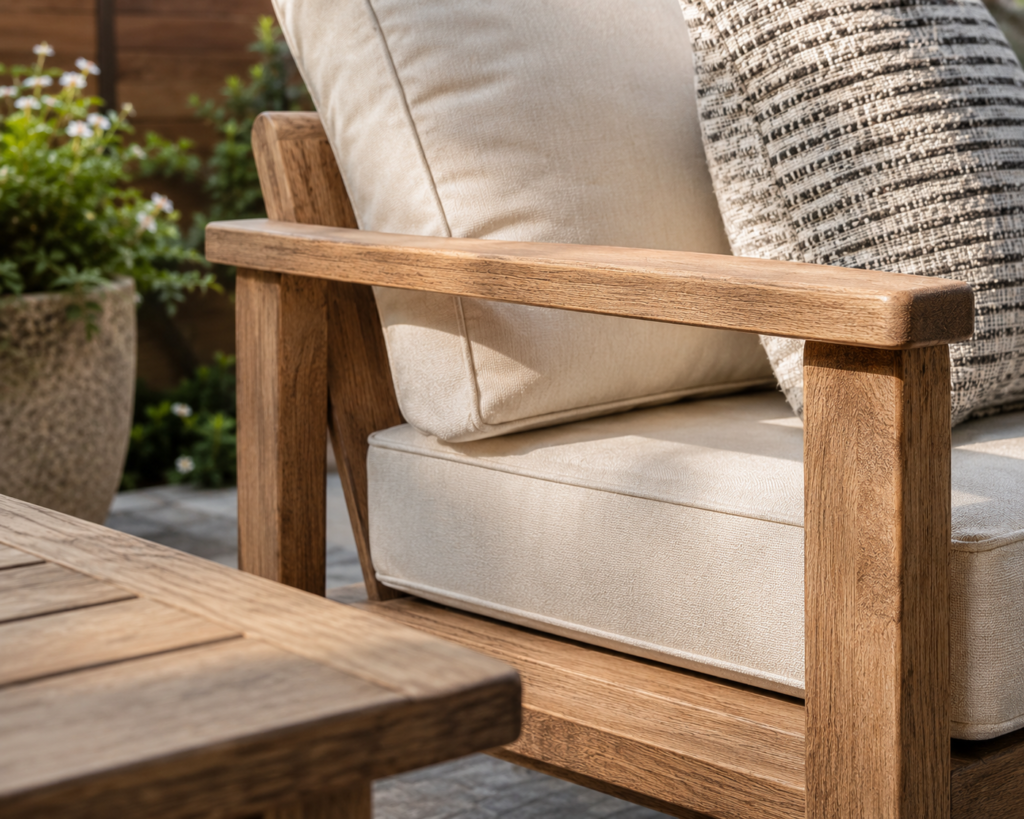
Outdoor furniture takes a beating from sun, rain, and temperature swings, so material choice matters more here than it does indoors. A few materials consistently perform well across US climates:
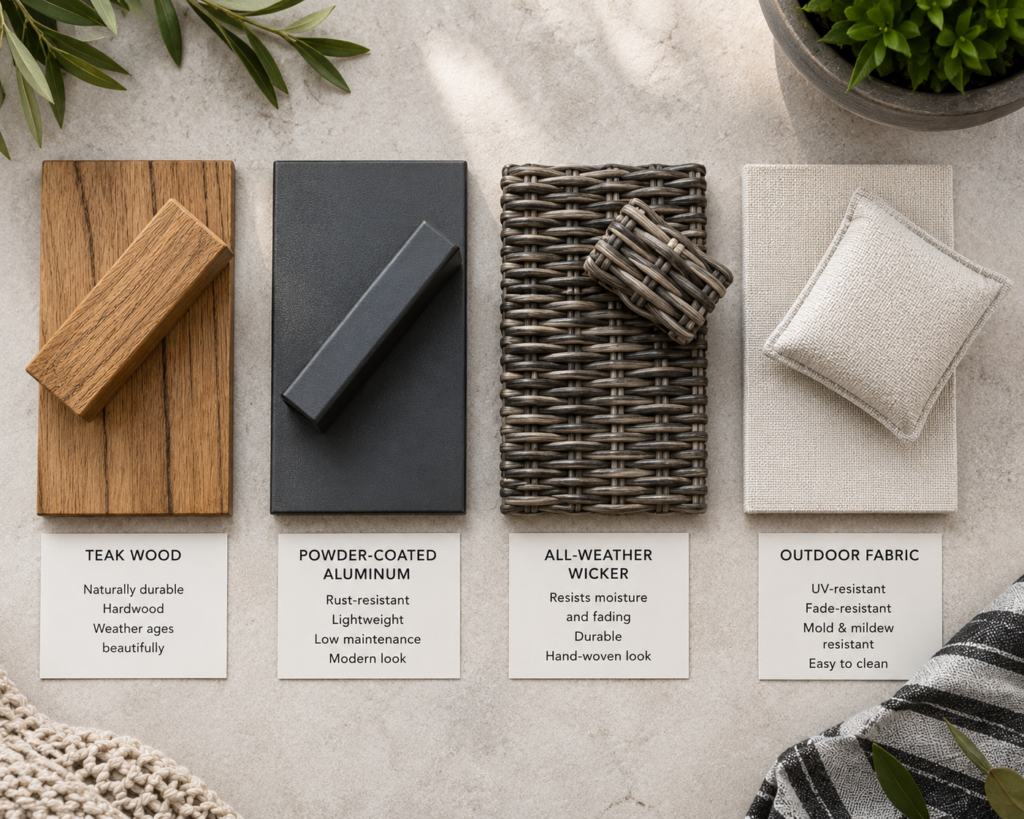
- Teak and eucalyptus wood, which resist rot and weathering naturally
- Powder-coated aluminum, lightweight and rust-resistant
- All-weather wicker, which mimics natural rattan without the maintenance
- Quick-dry foam cushions with outdoor-rated fabric covers
If you live somewhere with harsh winters, plan for seasonal storage or invest in furniture covers, since even weather-resistant materials last longer with a little protection during the off-season.
Lighting: The Detail That Makes or Breaks the Space
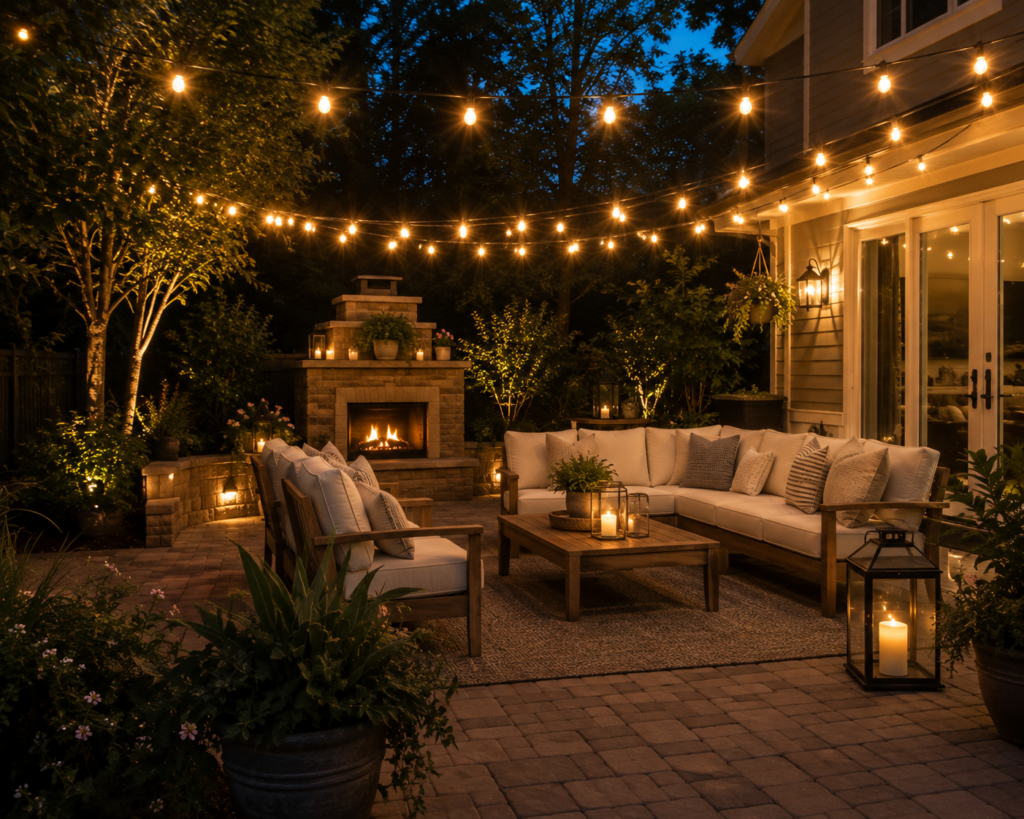
Good lighting is what turns an outdoor room from a daytime-only space into somewhere you’ll actually use in the evening. Layer your lighting the way you would indoors, rather than relying on a single bright fixture.
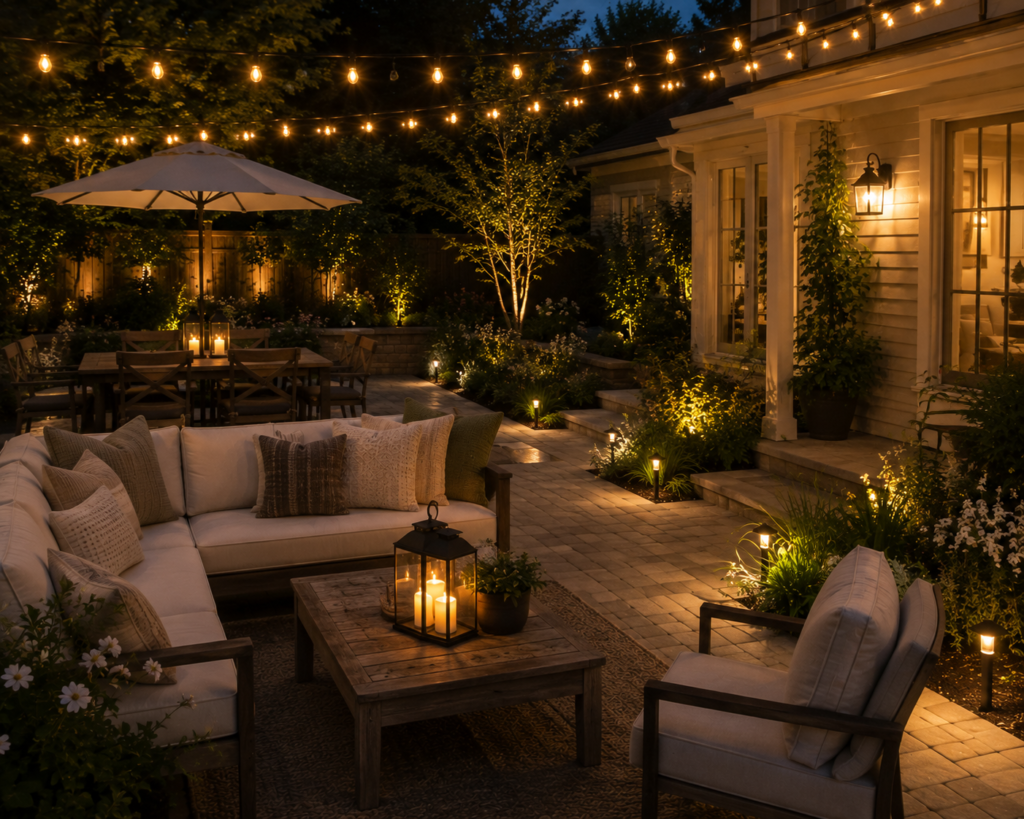
- String lights overhead for soft, ambient light
- Lanterns or table lamps at seating height for a cozy feel
- Path lights for safety along walkways
- Uplighting on trees or architectural features for a dramatic touch
Adding a Focal Point
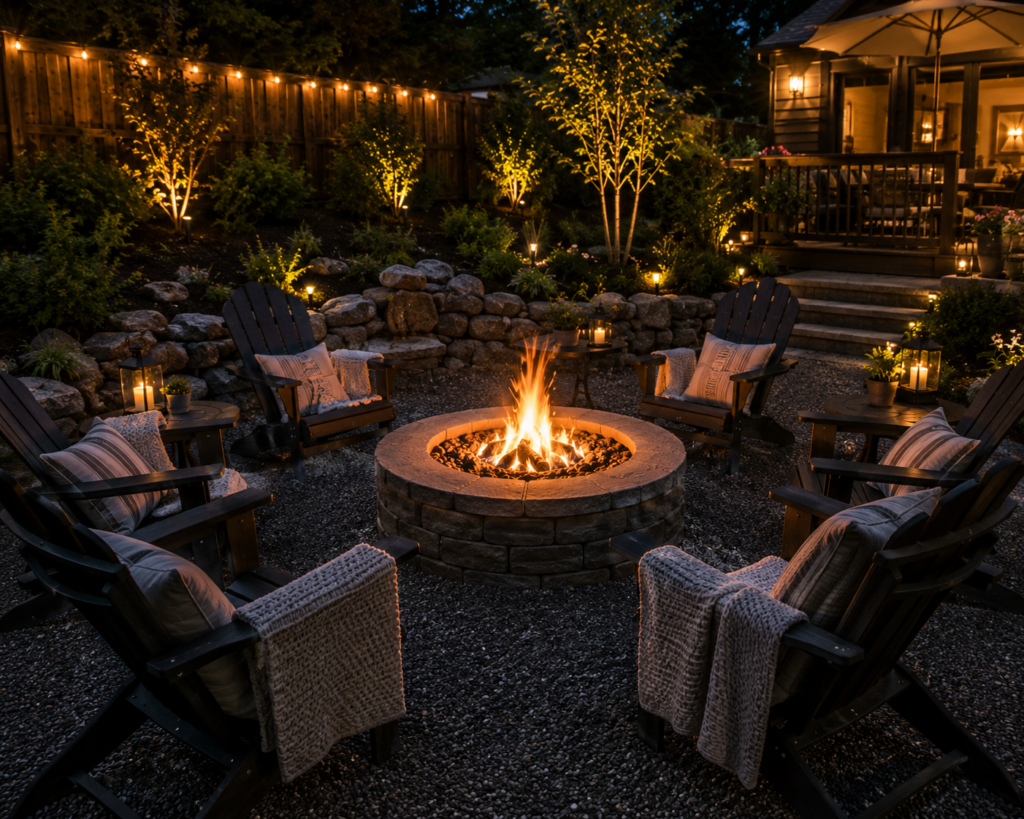
Every great room, indoors or out, tends to be built around a focal point. Outdoors, that’s often a fire pit, an outdoor fireplace, or a dining table, depending on how you plan to use the space. A fire pit in particular has become one of the most requested outdoor room additions in the US, since it extends usable outdoor time well into the cooler months and naturally draws seating into a circle.
Weatherproofing and Year-Round Use
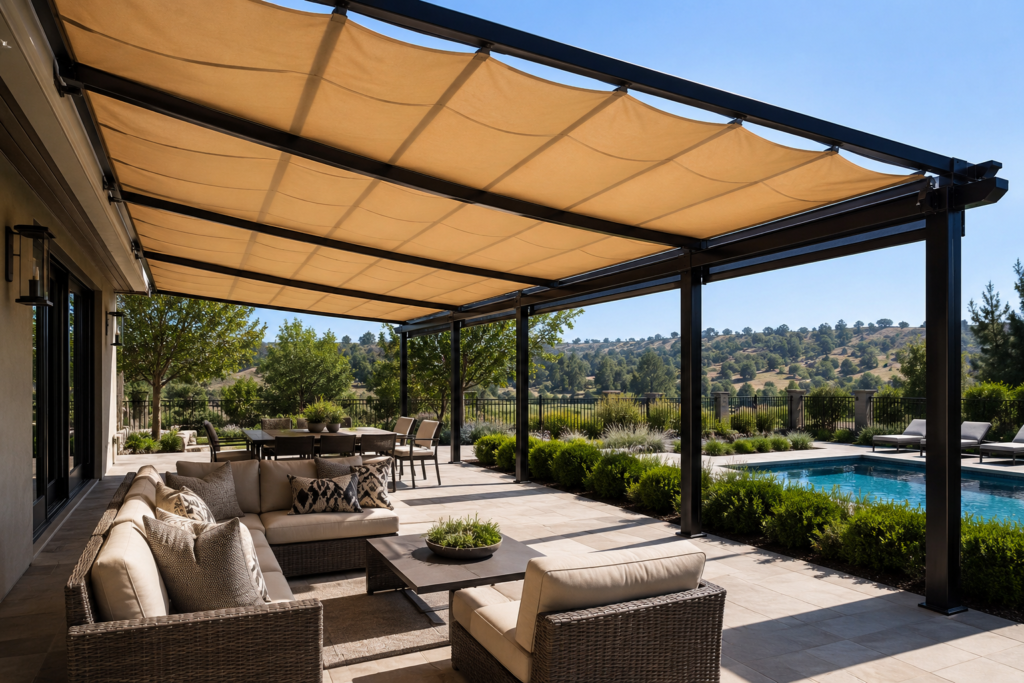
One of the most common frustrations with outdoor rooms is losing access to them for half the year. A few upgrades can meaningfully extend your outdoor season:
- A pergola with a retractable canopy or shade sail for sun and light rain protection
- Outdoor heaters or a fire feature for cooler evenings
- Ceiling fans on covered patios to keep the space comfortable in summer humidity
- Clear vinyl panels or outdoor curtains that can be closed during wind or light rain
Budget-Friendly Ways to Upgrade an Outdoor Room
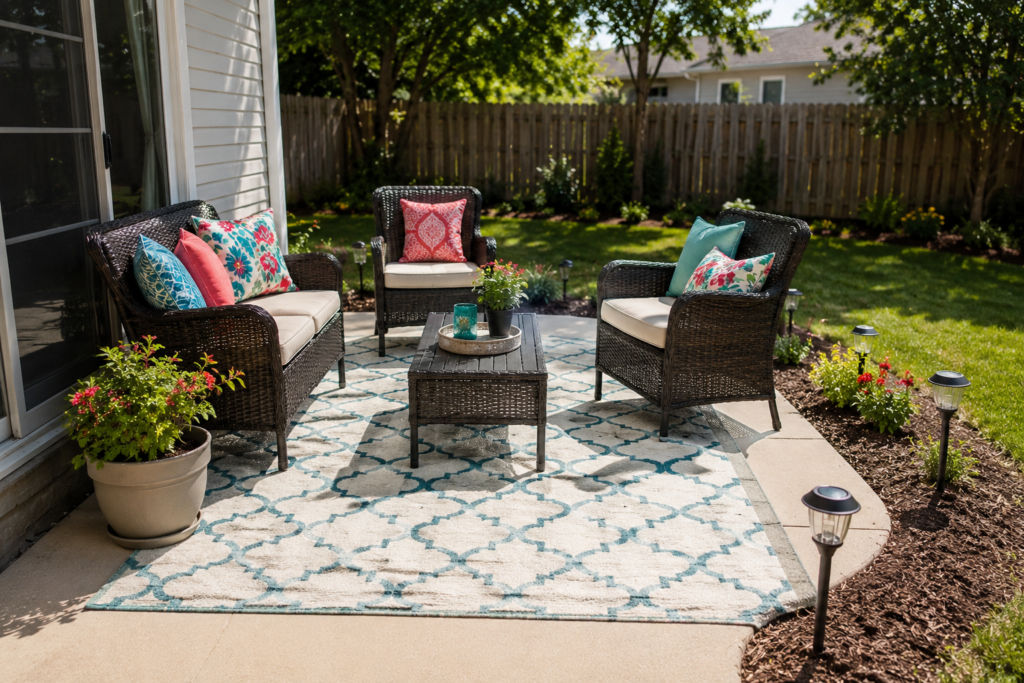
A full outdoor living room build-out can get expensive quickly, but plenty of smaller upgrades deliver a big visual impact without a major investment:
- Paint or stain an existing deck or concrete patio for an instant refresh
- Add an outdoor rug and a few new throw pillows to existing furniture
- Install solar-powered path lights, which require no wiring
- Build a simple planter box to add greenery and color
- Hang a piece of weatherproof outdoor art or a mirror to add visual interest
Common Mistakes to Avoid
- Buying furniture that’s too large for the space, which makes the area feel cramped
- Skipping shade planning and ending up with a space that’s unusable midday in summer
- Choosing indoor materials that aren’t rated for outdoor moisture and UV exposure
- Forgetting storage for cushions and pillows during bad weather
- Overlooking scale, an outdoor rug or light fixture that’s too small will make the whole space feel unfinished
Frequently Asked Questions
How much does it cost to create an outdoor living room?
Costs vary widely depending on scope. A simple furniture and lighting refresh on an existing patio can cost a few hundred dollars, while a full build-out with a pergola, fire feature, and new flooring can run into the thousands. Starting with furniture layout and lighting before tackling structural additions is the most budget-friendly approach.
Do I need a permit to build an outdoor room?
Simple additions like furniture, rugs, and string lights typically don’t require permits. Structural additions like a pergola, fireplace, or covered roof often do, so it’s worth checking with your local building department before starting a bigger project.
What’s the best flooring for an outdoor living space?
Composite decking, pavers, and stamped concrete are popular options in the US because they hold up well against weather and require relatively low maintenance compared to natural wood decking.
Outdoor Room Styles to Consider
Just like indoor design, outdoor living spaces tend to follow a handful of popular style directions, and picking one early makes every other decision, furniture, color, materials, much easier.
Modern Minimalist
Clean lines, a neutral color palette, and simple geometric furniture define this style. It works especially well on smaller patios where a cluttered look would feel overwhelming.
Rustic and Cozy
Think natural wood tones, woven textures, and warm string lighting. This style leans into a cabin-like feel and pairs naturally with a fire pit as the centerpiece.
Coastal and Airy
Light colors, natural fibers like rattan, and breezy fabrics define a coastal outdoor room. It’s a popular choice for homes near water or anyone wanting a relaxed, vacation-like feel year-round.
Privacy Considerations for Outdoor Rooms
Privacy is one of the most underrated factors in whether an outdoor room actually gets used. A stunning setup surrounded by direct sightlines from neighboring yards or the street tends to feel exposed rather than relaxing, and that undermines the whole point of the space.
- Tall planters with dense shrubs or grasses along property lines
- A pergola with retractable privacy screens or curtains
- A simple lattice fence panel positioned to block the most direct sightline
- Strategic furniture placement that faces away from neighboring windows
Even a small privacy upgrade can make a noticeable difference in how comfortable people feel spending real time in the space, rather than just passing through it.
Final Thoughts
Creating an outdoor living room comes down to treating your outdoor space with the same intention you’d give any room inside your house, thoughtful layout, comfortable furniture, layered lighting, and a clear sense of purpose. Start small if you need to, a rug, some lighting, and a furniture rearrangement can transform a space almost overnight, and build from there as your budget and priorities allow. Once it’s done, you’ll likely find yourself spending far more time outside than you expected.