
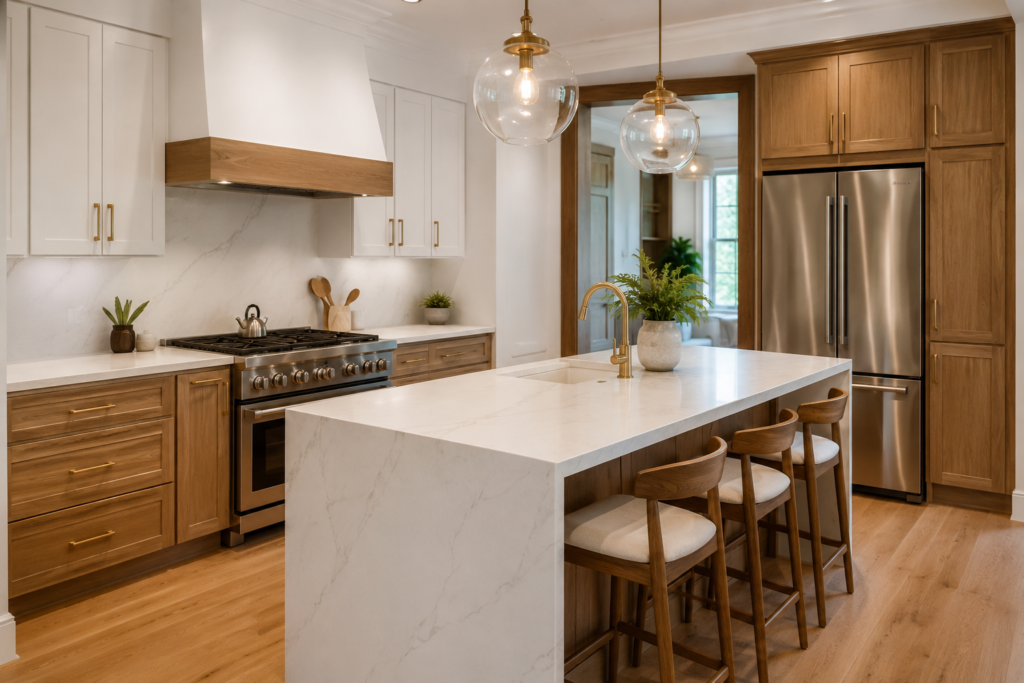
If you’ve started pricing out a kitchen remodel in 2026, you’ve probably noticed the numbers are all over the place. One article says $15,000. Another says $150,000. Neither one is wrong, exactly — they’re just talking about very different projects.
The truth is, kitchen renovation cost depends on where you live, how much you’re changing, and what materials you choose. This guide breaks down real 2026 numbers so you know what to expect before you call a contractor, plus a few ways to keep your budget from spiraling.
How Much Does a Kitchen Remodel Really Cost in 2026?
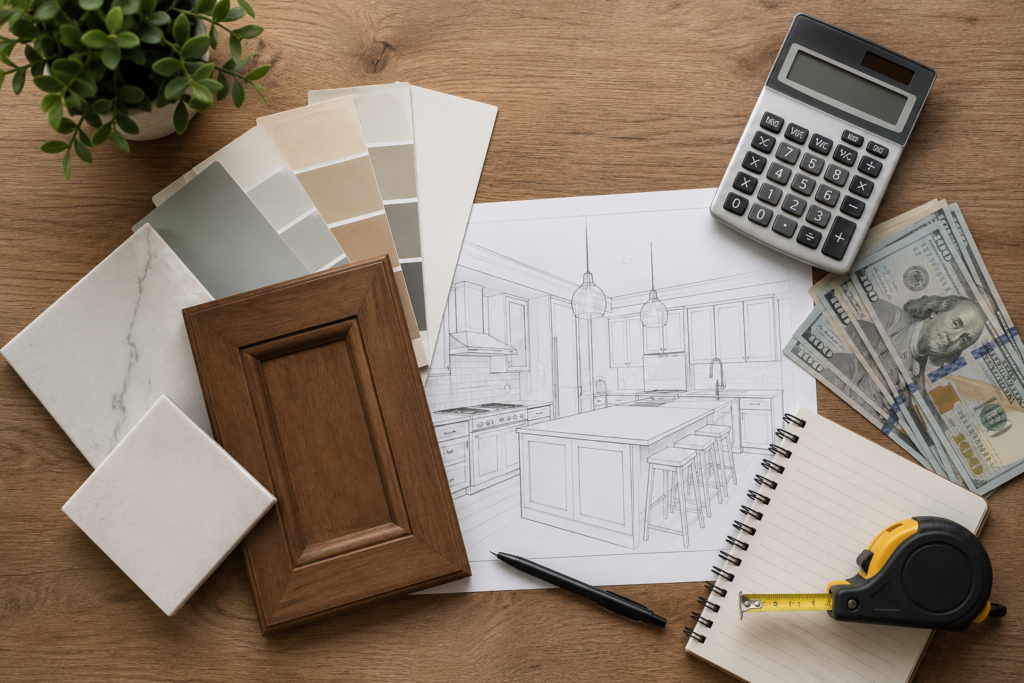
Nationally, kitchen remodeling costs in 2026 range from about $15,000 on the low end to well over $150,000 for a high-end, custom build. Most homeowners land somewhere in the middle. Here’s how that breaks down by project type.
Minor Kitchen Remodel Costs

A minor kitchen remodel typically means you keep your existing cabinet boxes and layout, but refresh the doors, hardware, countertops, sink, and flooring. According to Houzz’s 2026 Kitchen Trends Study, the median spend for this type of project sits around $20,000, though many homeowners complete a solid refresh for $15,000 to $28,000.
The best part? Minor remodels tend to offer the strongest return on investment of any home improvement project, which we’ll get into below.
Major Kitchen Remodel Costs

A major kitchen remodel involves replacing everything — cabinets, countertops, appliances, flooring, and often the layout itself. The national median for a full remodel is around $55,000, climbing to roughly $75,000 or more for kitchens larger than 250 square feet. In high cost-of-living regions, full remodels commonly run $80,000 to $150,000.
What Drives Kitchen Remodel Costs Up (or Down)
Four categories eat up most of your renovation budget. Knowing where the money goes helps you decide where to splurge and where to save.
Cabinetry (30–40% of Budget)

Cabinets are almost always the single biggest expense. Stock cabinets run about $4,000 to $10,000, semi-custom lands between $12,000 and $25,000, and fully custom cabinetry can exceed $60,000. Door style, wood species, and storage features all move the number.
Countertops (10–20% of Budget)
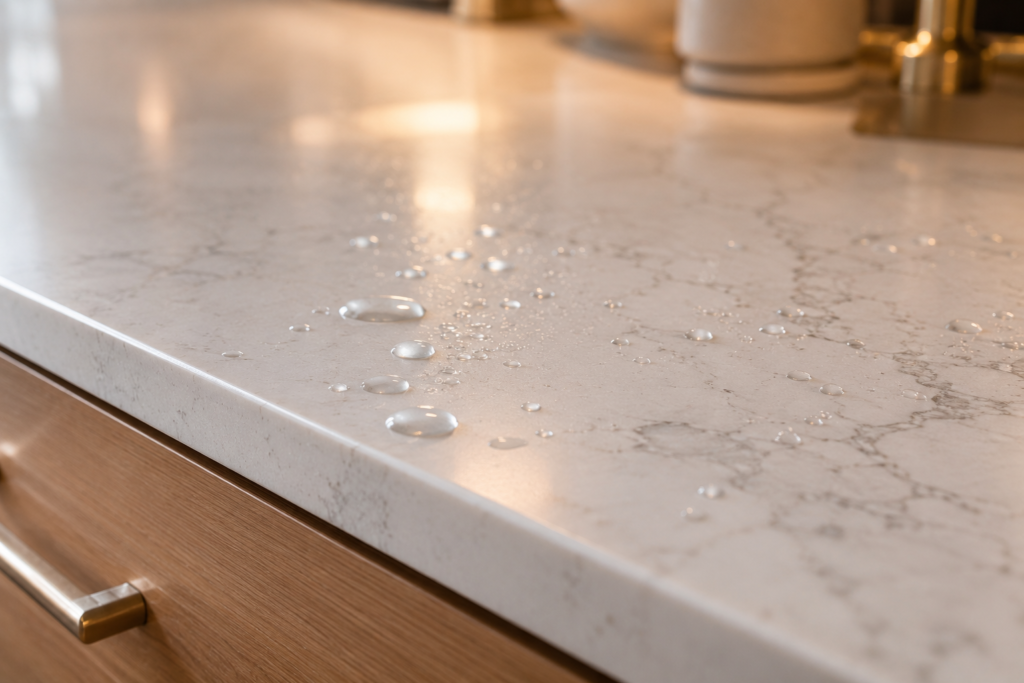
Quartz remains the most popular countertop material heading into 2026, typically priced between $65 and $150 per square foot installed. Granite is a more budget-friendly alternative at $45 to $120 per square foot, while quartzite sits at the premium end.
Appliances (15–25% of Budget)

A full mid-range appliance package usually costs $5,000 to $25,000, while luxury and panel-ready appliance suites can push past $30,000. Panel-ready appliances — which hide behind matching cabinet fronts — are one of the biggest trends of the year.
Labor (25–40% of Budget)
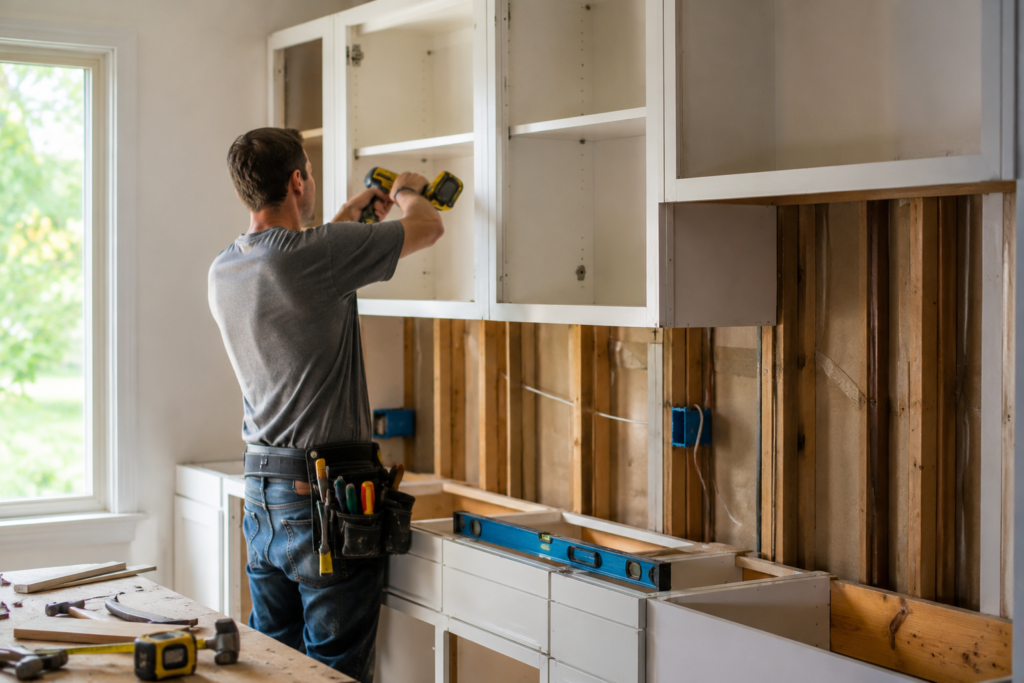
Demolition, plumbing, electrical work, drywall, and installation typically add up to $12,000 to $40,000 or more, depending on your region and whether you’re moving plumbing or gas lines. Skilled-trade labor shortages have pushed installation rates higher nationwide, so it pays to get at least three contractor quotes.
Kitchen Remodel Cost by US Region
Where you live has a bigger impact on your budget than almost anything else. Here’s a rough regional breakdown for a small to mid-size kitchen remodel:
- West Coast: $75,000 – $100,000
- East Coast: $80,000 – $120,000
- Midwest: $30,000 – $50,000
- Southeast: $15,000 – $30,000
These figures reflect local labor rates and material sourcing costs, so use national averages as a starting point, not a final quote — always get local estimates.
Is a Kitchen Remodel Worth It? ROI Explained
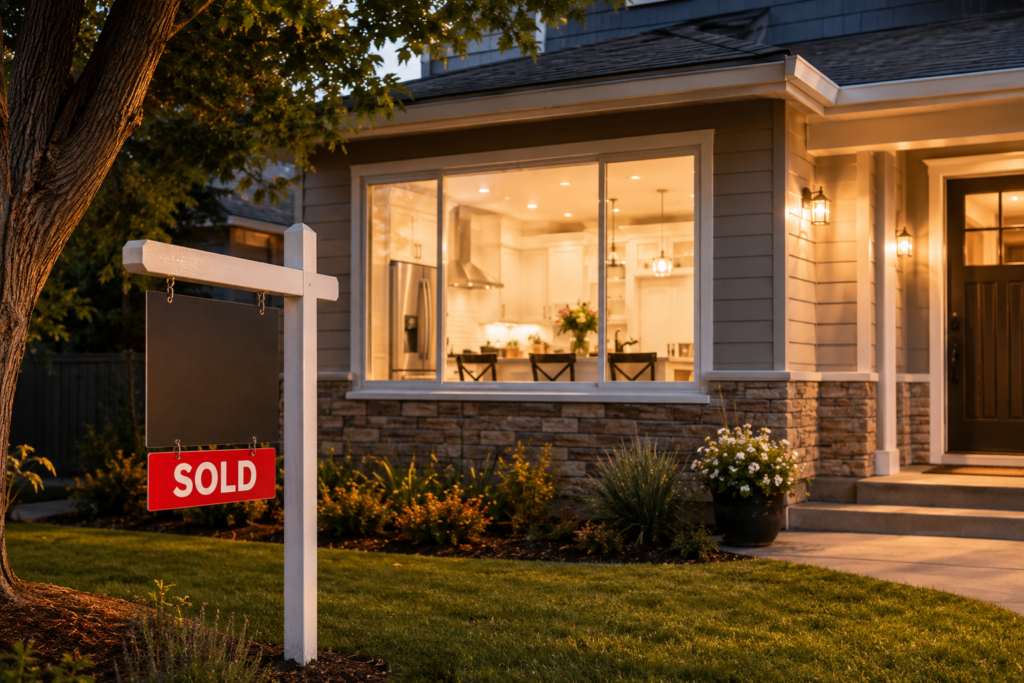
Kitchens consistently rank among the highest-ROI home improvement projects, but the size of your project changes how much you get back.
- Minor kitchen remodels typically recoup 60–75% of their cost at resale.
- Major kitchen remodels generally recoup 50–60%, since the higher upfront cost doesn’t scale as cleanly with resale value.
If you’re renovating primarily to boost resale value, a well-executed minor remodel — new doors, hardware, countertops, and paint — is often the smarter financial move than a full gut renovation.
7 Smart Ways to Save on Your Kitchen Renovation
- Keep your existing layout. Moving plumbing or knocking down walls adds design time, permits, and labor costs fast.
- Reface instead of replace. If your cabinet boxes are in good shape, new doors and hardware cost a fraction of full replacement.
- Buy cabinets early. Material tariffs have been pushing prices up through 2026, so locking in a quote sooner rather than later can protect your budget.
- Mix your finish levels. Splurge on countertops and cabinets, which you touch and see daily, and save on lower-impact items like hardware.
- Step down one appliance tier. Mid-grade refrigerators and ranges perform nearly as well as luxury models for a fraction of the price.
- Budget 10–15% extra. Hidden costs — electrical panel upgrades, drywall patching, permit fees — catch almost every homeowner off guard.
- Get at least three contractor bids. Labor costs vary widely by contractor, even within the same zip code.
Kitchen Remodeling Trends Worth Investing In for 2026
The NKBA’s 2026 industry survey points to a clear shift: homeowners are moving away from all-white, ultra-minimal kitchens toward warmer, more personal spaces. A few trends worth considering if you want your remodel to feel current for years, not months:
- Warm wood tones and mixed cabinet finishes replacing all-white cabinetry
- Bold, veined stone countertops in place of flat, uniform quartz
- Panel-ready, integrated appliances for a built-in look
- Statement lighting as a functional focal point, not an afterthought
- Smart, space-efficient storage like appliance garages and pull-out organization
How Long Does a Kitchen Remodel Take?

Timeline is the other question homeowners underestimate almost as often as cost. A minor refresh — new doors, countertops, and paint — can often be completed in two to four weeks. A major remodel that involves moving plumbing, upgrading electrical, and installing custom cabinetry typically takes eight to twelve weeks from demo to final walkthrough, and that’s assuming materials arrive on schedule.
Cabinet lead times are the biggest wildcard in 2026. Semi-custom and custom orders are running six to ten weeks out at many manufacturers, so it’s worth placing your cabinet order before you finalize your contractor’s start date, not after.
DIY vs. Hiring a Contractor
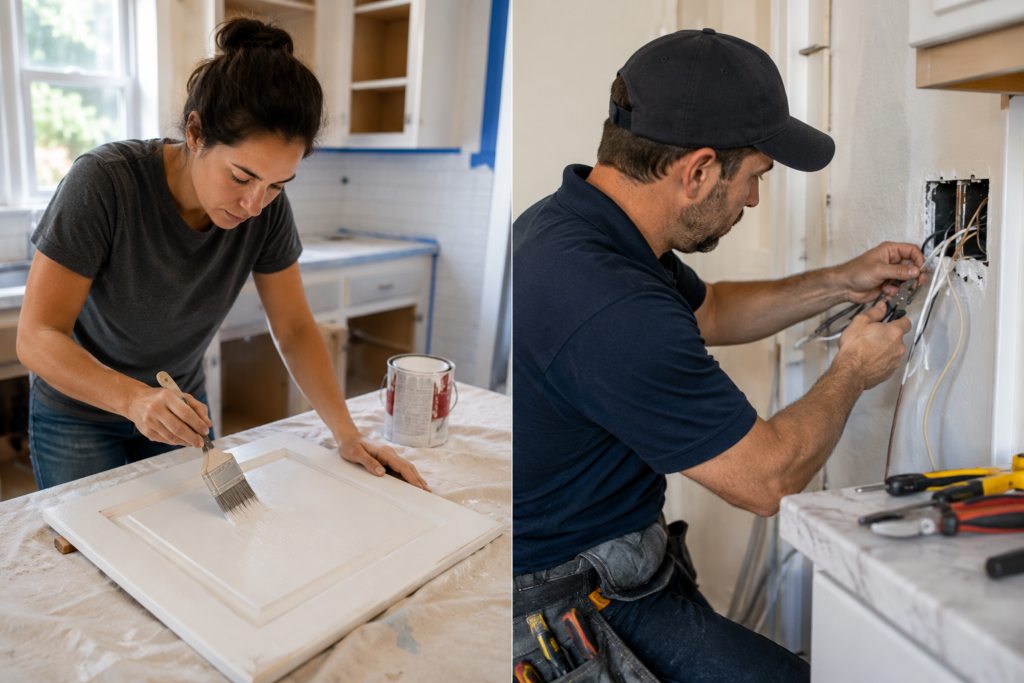
It’s tempting to save on labor by handling parts of the project yourself, and for cosmetic work like painting cabinets or installing a backsplash, that can make sense. But for anything involving plumbing, electrical, or load-bearing walls, hiring a licensed contractor isn’t just about quality — it’s about safety and code compliance.
Most homeowners land on a hybrid approach: hire pros for the structural and mechanical work, then handle painting, hardware installation, or simple demo themselves to trim a few thousand dollars off the total.
Frequently Asked Questions
What is the average cost of a kitchen remodel in 2026?
Most homeowners spend between $25,000 and $75,000 on a mid-range kitchen remodel in 2026, though minor refreshes can start around $15,000 and high-end custom projects can exceed $150,000.
Is it cheaper to reface or replace kitchen cabinets?
Refacing is almost always cheaper. Keeping your existing cabinet boxes and replacing only the doors, drawer fronts, and hardware typically costs 30–50% less than full cabinet replacement, while still giving your kitchen a completely new look.
Does a kitchen remodel add value to a home?
Yes. Kitchen remodels are consistently among the top home improvement projects for return on investment, with minor remodels recouping 60–75% of their cost and major remodels recouping 50–60%, according to national cost-vs-value data.
What should I prioritize on a tight kitchen remodel budget?
Countertops, cabinet fronts, and lighting have the biggest visual impact for the money. If your budget is tight, refacing cabinets and upgrading countertops will transform the space more than a full appliance overhaul.
Final Thoughts
A kitchen remodel is one of the most valuable investments you can make in your home, but it’s also one of the easiest to overspend on if you go in without a plan. Start with a realistic budget based on your region and project scope, prioritize the elements you’ll use every single day, and don’t be afraid to phase your renovation if the full scope doesn’t fit your budget this year.
Whether you’re planning a quick refresh or a full gut renovation, getting your numbers right upfront is the difference between a kitchen you love and a project that runs away from you.