
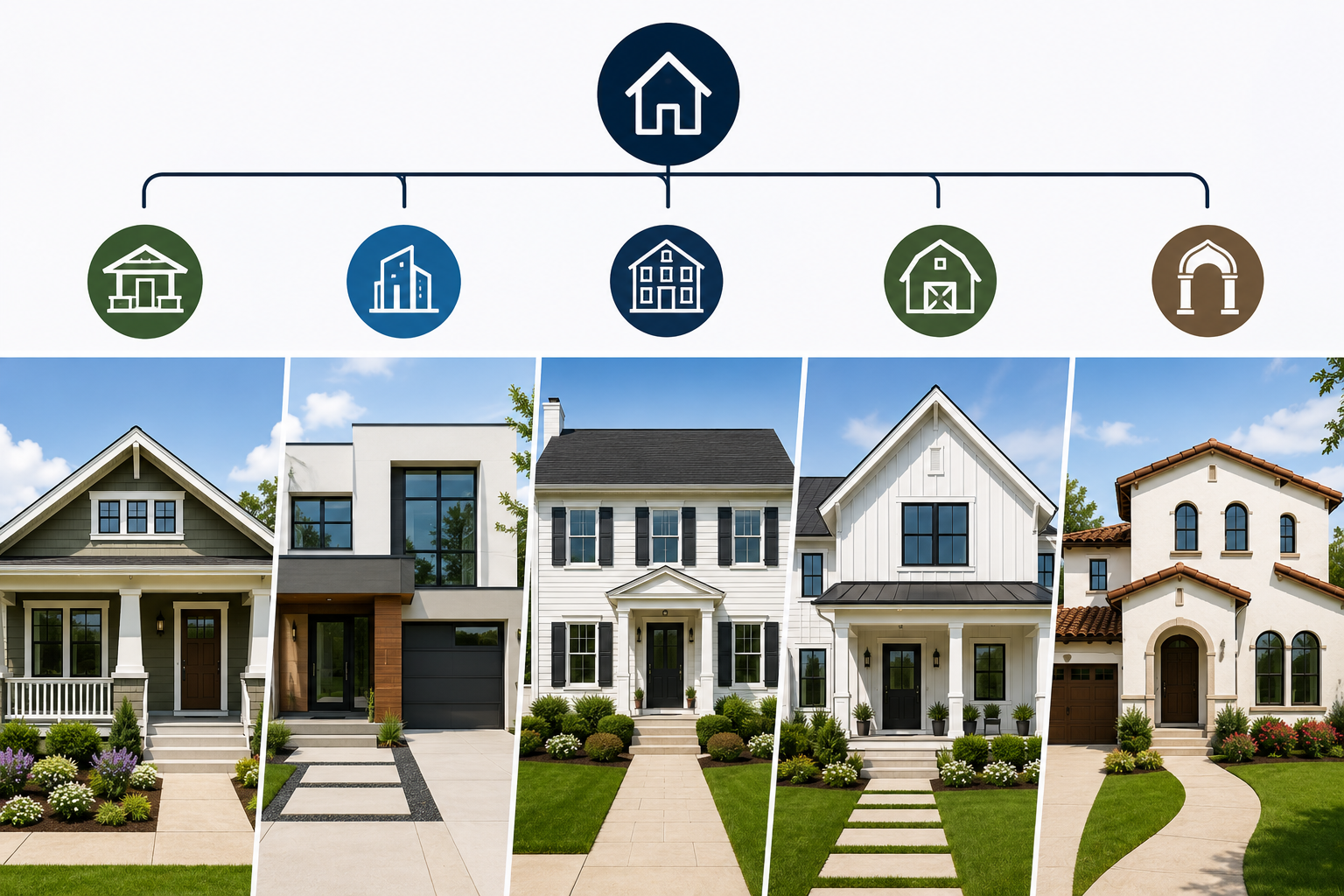
Your home’s exterior is the first thing everyone sees — neighbors, visitors, buyers, and appraisers. Whether you’re planning a full exterior home remodeling project or just a few targeted upgrades, this guide walks you through every decision: styles, materials, paint, lighting, doors, shutters, and the contractors who do it right.
Popular Home Exterior Styles in the U.S.
Before you pick a single material or color, settle on a style. Every good exterior home renovation starts here. Your style shapes your material palette, your color options, and your trim choices — everything flows from this one decision.
The Craftsman Home Exterior :-

The craftsman home exterior remains one of the most beloved styles across America. It features tapered porch columns, low-pitched gabled roofs with deep overhangs, decorative knee braces, and front porches built to actually be used. It reads as warm, handcrafted, and authentically American.
Craftsman works beautifully in earthy tones — forest green, warm chocolate brown, deep red, and muted yellow — paired with creamy warm white trim. Stone and wood details complete the picture.
Pro Tip: Best colors for craftsman exteriors: Sage green, chocolate brown, slate blue, deep olive, and terracotta. Always pair with a warm white or cream trim. Bright white can look harsh against craftsman materials.
The Modern Home Exterior :-
Clean lines. Flat or low-pitched roofs. Oversized windows. Zero unnecessary ornamentation. That’s the modern home exterior in a nutshell. Modern homes use material contrast — smooth fiber cement panels against rough stone veneer, dark cladding beside large glass panels — to create visual interest without traditional detail work.
Color palettes lean toward crisp whites, deep charcoals, matte black, and warm light gray. A bold front door in a saturated color — deep blue, burgundy, or forest green — provides the focal point against the restrained backdrop.
The Gray Home Exterior:-
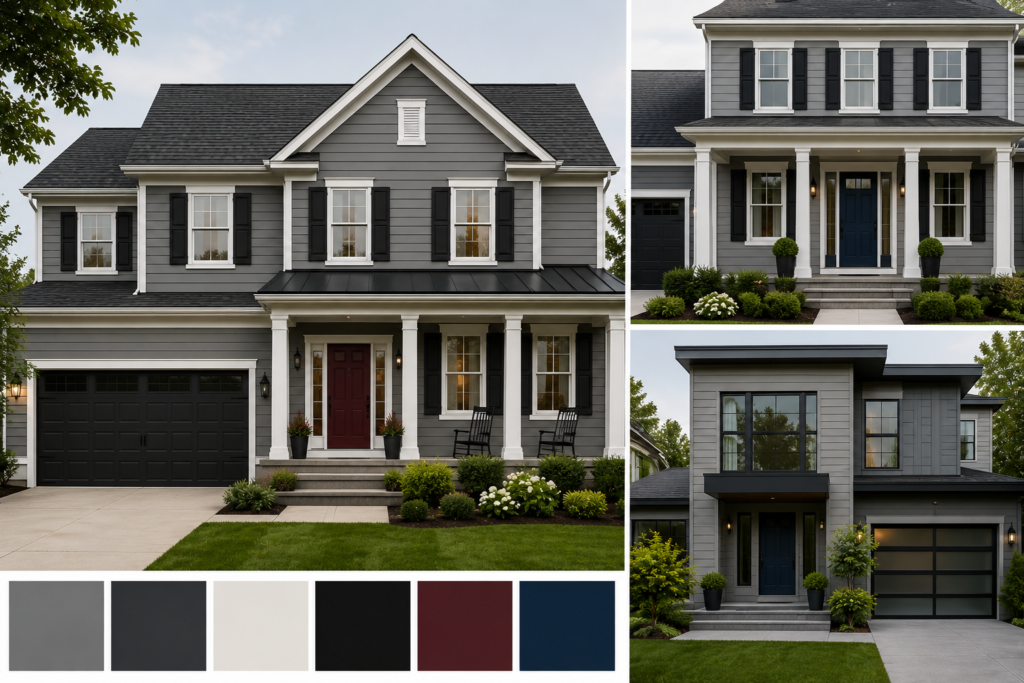
Gray has dominated U.S. home exteriors for years and continues to hold its ground in 2025. A gray home exterior reads as sophisticated and timeless. It pairs with almost any trim color and works across virtually every architectural style — from craftsman to colonial to modern.
Pro Tip: Pair a medium gray siding with black shutters, a dark charcoal roof, and a bold front door — burgundy or navy both work great — for a look that photographs beautifully and holds its appeal for years.
Other Popular Exterior Home Styles :-
• Farmhouse — Board-and-batten siding, metal roofs, wrap-around porches, white or neutral palettes
• Colonial — Symmetrical facades, brick or wood siding, shuttered windows, formal entrance
• Ranch — Low-profile, single-story, horizontal emphasis, wide overhangs, earth tones
• Mediterranean — Stucco exteriors, terracotta tiles, arched windows, warm sandy tones
• Tudor — Steeply pitched roofs, decorative half-timbering, stone or brick facades
2.Choosing the Right Home Exterior Materials
Your material choice determines your home’s durability, maintenance demands, energy performance, and visual character for the next two to five decades. This is one of the most consequential decisions in any exterior home renovation — and it’s worth getting right.

Vinyl Siding — Budget-Friendly :-
Cost: $3–$12 per sq ft installed | Durability: 20–40 years | Maintenance: Very Low

The most widely used siding material in the U.S. Modern vinyl looks dramatically better than the product from the 1990s — realistic wood grain textures, consistent coloring, and a wide range of profiles. It resists moisture and insects and never needs painting. Mastic home exteriors siding colors offer a particularly wide catalog if you source vinyl through that brand.
Fiber Cement Siding — Best Overall :-
Cost: $5–$14 per sq ft installed | Durability: 25–50 years | Maintenance: Low
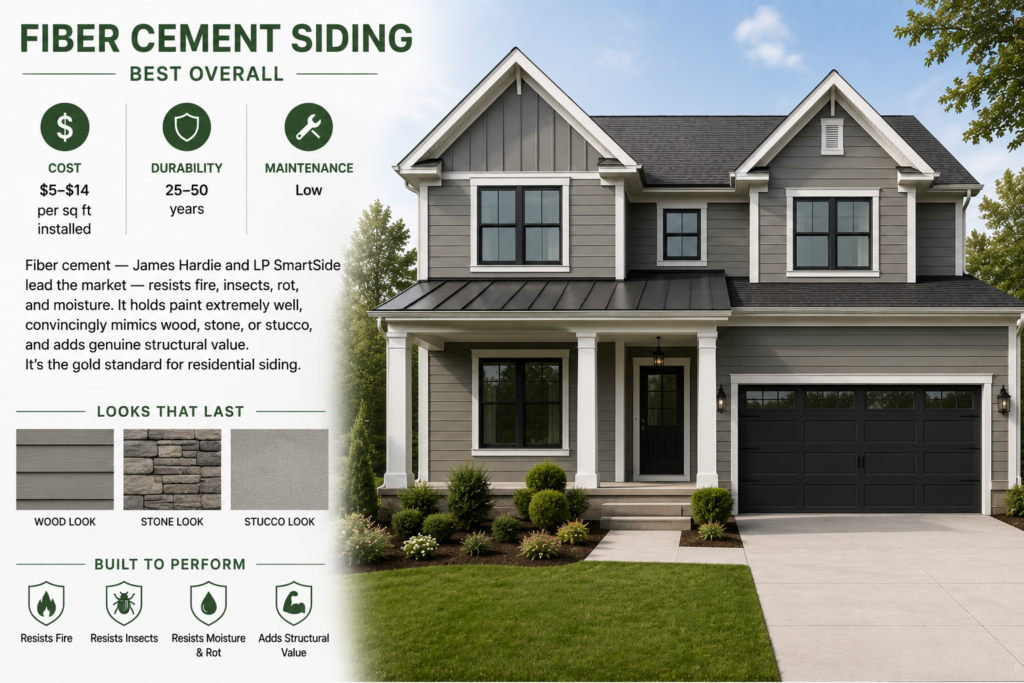
Fiber cement — James Hardie and LP SmartSide lead the market — resists fire, insects, rot, and moisture. It holds paint extremely well, convincingly mimics wood, stone, or stucco, and adds genuine structural value. It’s the gold standard for residential siding in.
Brick & Natural Stone — Premium Choice :-
Cost: $15–$30+ per sq ft installed | Durability: 50–100+ years | Maintenance: Very Low

Brick and natural stone are lifetime investments. Maintenance is minimal — mostly repointing mortar every couple of decades. Stone veneer (manufactured or real) gives you a similar premium look at a lower cost and adds measurable resale value.
Engineered Wood — High Value :-
Cost: $4–$12 per sq ft installed | Durability: 20–30 years | Maintenance: Moderate
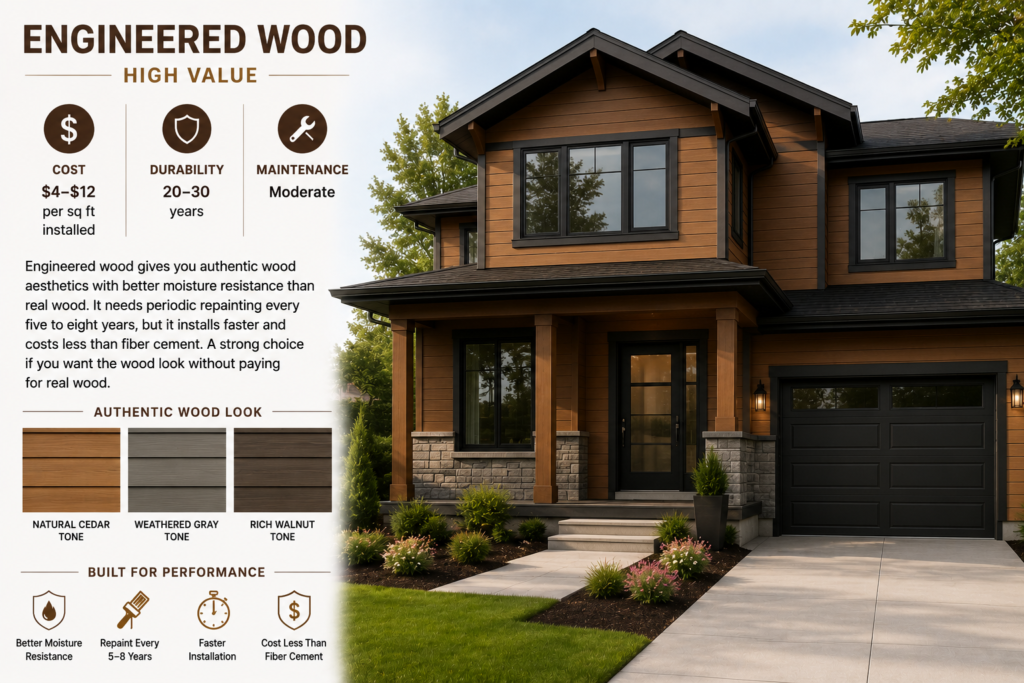
Engineered wood gives you authentic wood aesthetics with better moisture resistance than real wood. It needs periodic repainting every five to eight years, but it installs faster and costs less than fiber cement. A strong choice if you want the wood look without paying for real wood.
3.Modern Exterior Design for Small Houses
Small doesn’t mean forgettable. Modern exterior design for small houses is one of the most exciting areas in residential design right now. Done right, a small home exterior can look more intentional and stylish than a house twice its size.
Here’s what actually works:
1. Use vertical elements. Board-and-batten siding, tall windows, and vertical planters draw the eye upward and make a small house feel taller and more substantial.
2. Go bold with color. Small homes can take more color risk than larger ones. Deep navy, forest green, or matte black makes a small home look intentional rather than just compact.
3. Make the door the focal point. A striking front door in a contrasting color with quality hardware punches well above its weight on a small home. This is your biggest ROI upgrade per dollar spent.
4. Simplify the roofline. Complex rooflines make small homes look cluttered. Clean gables or shed roofs with crisp overhangs read as modern and intentional.
5. Mix two materials, not three. Fiber cement siding on the main body plus stone or wood on the front gable adds visual interest without chaos.
Edit the landscaping. Clean, structured planting — boxwoods, gravel paths, simple ground cover — frames the home and makes it look finished
4.How to Modernize a Split Level Home Exterior
Split level homes were built in massive numbers from the 1950s through the 1980s. They’re spacious and practical — but visually, many look frozen in 1975. Here’s how to modernize a split level home exterior without starting from scratch.

1. Address the roofline visually. Paint the fascia and soffits in charcoal or matte black to push them into the background and reduce the boxy appearance.
2. Reside the entire house. New siding is the single biggest visual upgrade for a split level. Use fiber cement or premium vinyl with a two-tone color scheme — darker body with lighter trim, or a medium body with a bold accent.
3. Define the entry. Add a covered porch or portico over the front door. Update the door itself — a dark-colored contemporary door with simple, quality hardware modernizes the entire facade instantly.
4. Replace the garage door. Swap an old raised-panel door for a contemporary flat-panel or carriage-style door. Steel doors with glass panels are especially effective for a modern look.
5. Edit the landscaping. Remove overgrown foundation shrubs and replace them with structured, lower-maintenance plantings. Add a clean walkway and quality exterior home lighting to frame the entry.
Pro Tip: Split level modernization can feel overwhelming. Pick one section — start with the front entry — and complete it fully before moving to the next. A fully resolved entry looks better than three half-finished upgrades.
5.Exterior Home Paint — Colors, Costs & Visualizer Tools
Cost to Paint Exterior of Home :-
The cost to paint exterior of home varies significantly based on square footage, number of stories, prep work
needed, and your U.S. location. Here are realistic estimates:
Exterior Painting Cost Estimates — U.S. Averages :-
| Home Size | DIY Cost | Professional Cost |
| Small (under 1,500 sq ft) | $300–$700 | $1,500–$3,500 |
| Medium (1,500–2,500 sq ft) | $500–$1,200 | $3,000–$6,000 |
| Large (2,500–4,000 sq ft) | $900–$2,000 | $5,000–$10,000+ |
The biggest cost variables: surface prep work (scraping, caulking, priming), number of coats required, and local labor rates. Coastal cities — Los Angeles, Seattle, New York, Miami — run significantly above the national average.
How to Paint Home Exterior: The Correct Process :-
1. Clean the surface first. Power wash the entire exterior and let it dry completely — at least 24 to 48 hours. Paint applied over a dirty surface peels within a year.
2. Scrape and sand all failing paint. Remove every flake and bubble. Sand rough edges smooth. This step determines how long your new paint job lasts — don’t rush it.
3. Repair and caulk. Fill all cracks, holes, and gaps with exterior-grade caulk. Pay extra attention to joints around windows, doors, and trim where water enters.
4. Prime before painting. Apply quality exterior primer on all bare wood and repaired areas. Skipping primer shortens the life of your topcoat dramatically.
5. Apply two topcoats. Use a premium 100% acrylic exterior latex paint. Use a brush for trim, a roller or airless sprayer for large flat surfaces.
Exterior Home Paint Visualizer Tools :-
Before you commit to a color, test it with an exterior home paint visualizer. These tools let you upload a photo of your home and experiment with hundreds of colors virtually — before spending a cent on paint.
• Sherwin-Williams ColorSnap Visualizer — most accurate color matching, huge library
• Benjamin Moore Personal Color Viewer — upload your own photo for realistic previews
• PPG Paint Your Place — free and fast for quick comparisons
• AI home exterior design free tools — let you redesign the entire facade, not just paint color (more in Section 11)
6.Exterior Home Lighting — The Most Underestimated Upgrade
Most homeowners spend thousands on siding and paint, then grab a cheap light fixture off a clearance rack. That’s a mistake. Exterior home lighting does three things simultaneously: it makes your home safer, improves curb appeal after dark, and extends your home’s visual statement into evening hours.

Types of Exterior Home Lighting to Consider :-
• Entry lighting — Matching sconces flanking your front door create a welcoming, symmetrical look. Quality entry lights are transformative for the money.
• Path lighting — Low-profile lights along your walkway guide visitors safely while adding warm layered glow to your landscaping at night.
• Uplighting — Ground-mounted uplights aimed at trees, architectural features, or the facade create dramatic nighttime curb appeal. Achievable for $200 to $600 in fixtures.
• Garage lighting — Match your garage fixtures to your entry fixtures. This one step creates visual cohesion across the entire front of the house.
• Motion-activated lighting — Practical and effective. These lights deter intruders, illuminate paths when you arrive home late, and reduce energy consumption.
Pro Tip: Look for weather-rated fixtures (IP44 minimum, IP65 for exposed locations) and warm color temperatures between 2700K and 3000K for the most welcoming nighttime appearance.