

Standing on the sidewalk and staring at your own house, trying to imagine it with a different color siding or a new front door, only gets you so far. For years, actually seeing that change meant hiring a designer, paying for a rendering, or just taking a leap of faith with a paint sample and hoping for the best. That’s changed. Free AI home exterior design tools now let you upload a photo of your actual house and preview a completely new look in seconds, no design degree or big budget required.
This guide covers how to design your home exterior using free AI tools, plus the timeless design principles that make an exterior actually look good once you commit to a real renovation. Whether you’re repainting, replacing siding, or planning a full curb appeal makeover, this is where to start.
Why AI Exterior Design Tools Are Changing Home Renovation
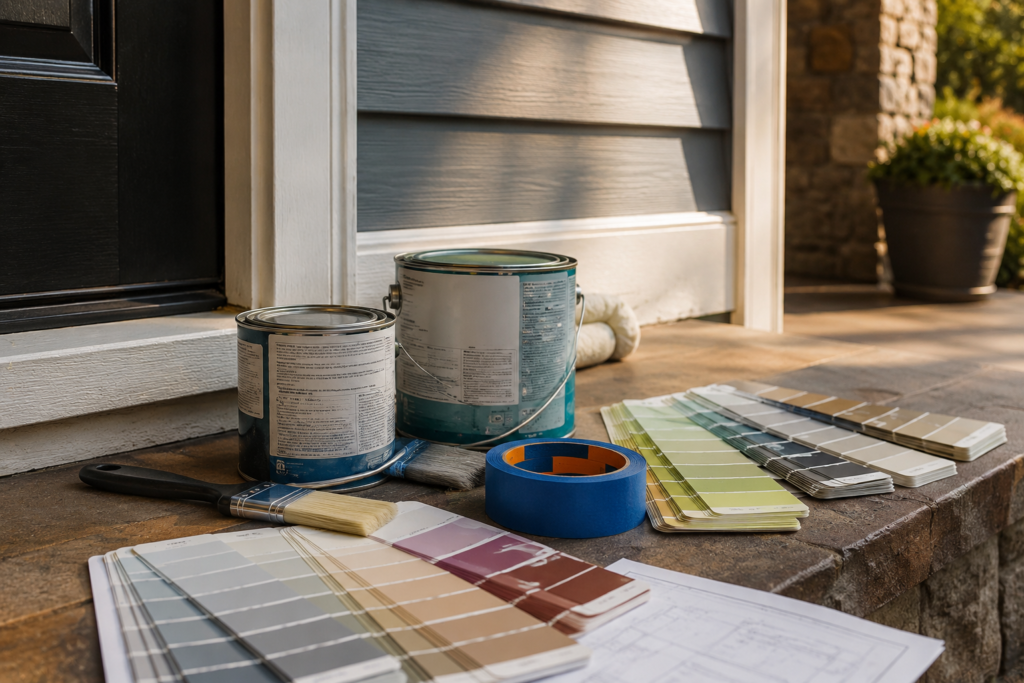
Exterior renovations are expensive to get wrong. Repainting a house, replacing siding, or swapping a roof color are not small decisions you can undo with a return receipt. AI home design tools solve a real problem here: they let you test dozens of combinations, colors, materials, rooflines, landscaping, before a single gallon of paint gets purchased.

This matters even more for US homeowners specifically, since exterior renovation costs have climbed steadily and most people only repaint or re-side a house once every decade or two. Getting the direction right the first time saves both money and regret.
How Free AI Home Exterior Design Tools Work

Most AI exterior design tools follow a similar process. You upload a straight-on photo of your home’s front elevation, the tool analyzes the architecture, rooflines, window placement, and existing materials, and then generates new versions of your house in different styles, colors, or material combinations while keeping the actual structure intact.
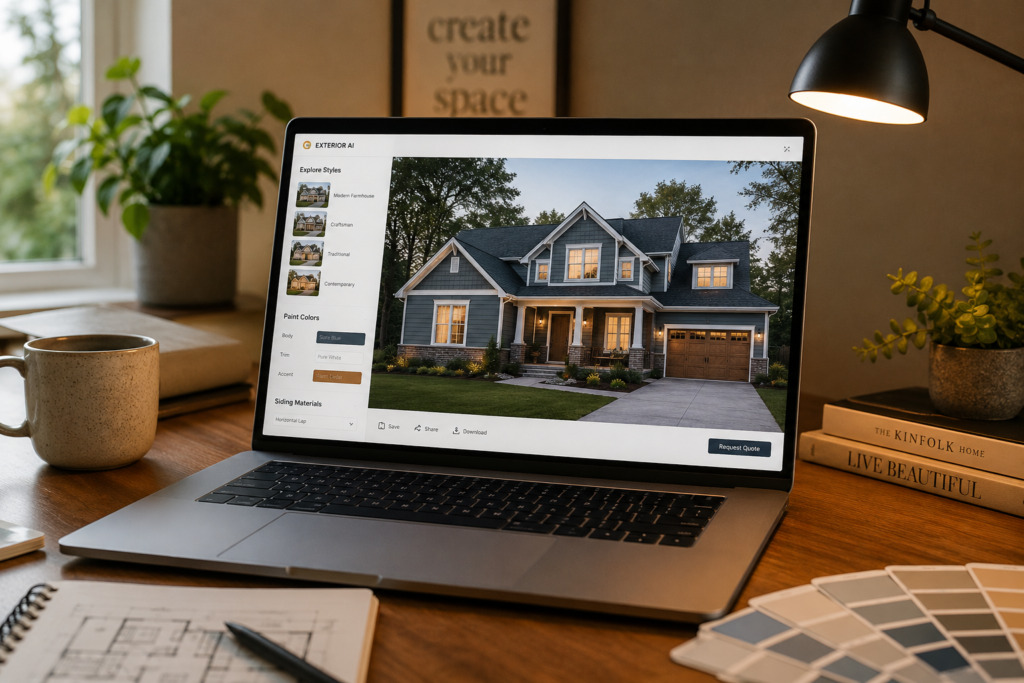
The better tools in this category preserve your home’s real geometry instead of generating a generic house that only loosely resembles yours. That distinction matters because a render that ignores your actual roofline or porch shape isn’t useful for planning a real renovation.
What to Look for in a Free AI Exterior Design Tool
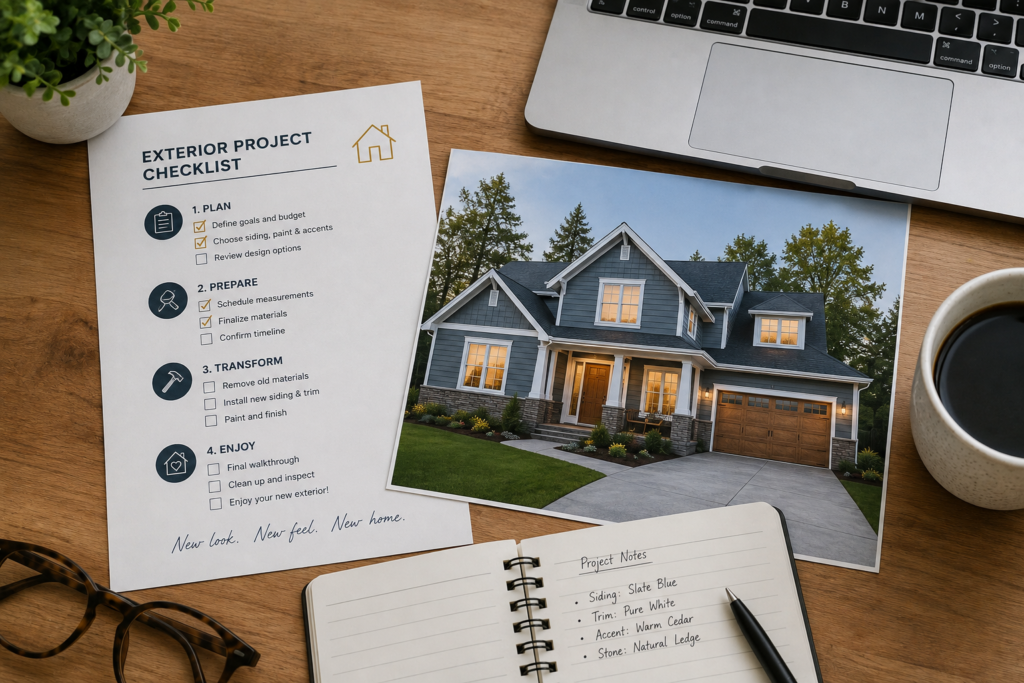
- No mandatory sign-up or credit card just to see a preview
- Multiple style directions (modern, farmhouse, craftsman, colonial, coastal, and similar)
- Accurate preservation of your home’s rooflines, windows, and porch structure
- The ability to compare a few different renders side by side
- Clear labeling of what’s free versus what’s locked behind a paid tier
It’s worth noting that these tools render aesthetics only. They don’t check local building codes, HOA restrictions, or structural feasibility, so anything you love in a render still needs a reality check before it becomes a renovation plan.
Popular Categories of Free AI Exterior Design Tools
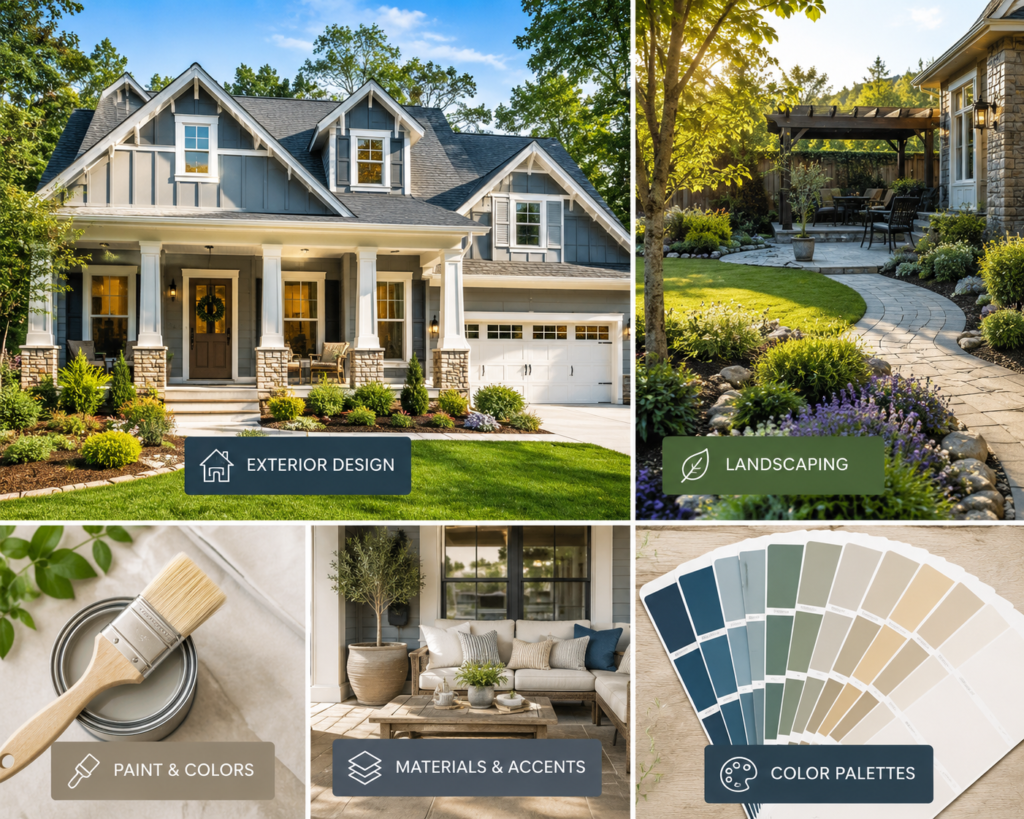
Rather than chasing one single app, it helps to think in categories, since different tools are built for different parts of the exterior design process:
- Whole-house AI visualizers that restyle your entire facade from one uploaded photo
- Paint-specific tools from major paint brands that let you preview specific exterior paint colors on your actual house
- 3D home design and floor-planning software for homeowners planning new construction or major structural changes
- Landscape-focused design tools for yards, walkways, and outdoor hardscaping
Many homeowners get the best results by combining tools: an AI visualizer for the big-picture style direction, then a paint brand’s color tool to lock in an exact, purchasable shade.
How to Get the Best Results From an AI Exterior Render
Start With a Clean, Straight-On Photo

Take your photo during daylight, ideally with even lighting and no harsh shadows across the front of the house. Stand directly across from the home rather than at an angle, and try to capture the full front elevation from roofline to foundation.
Try Several Style Directions Before Choosing One
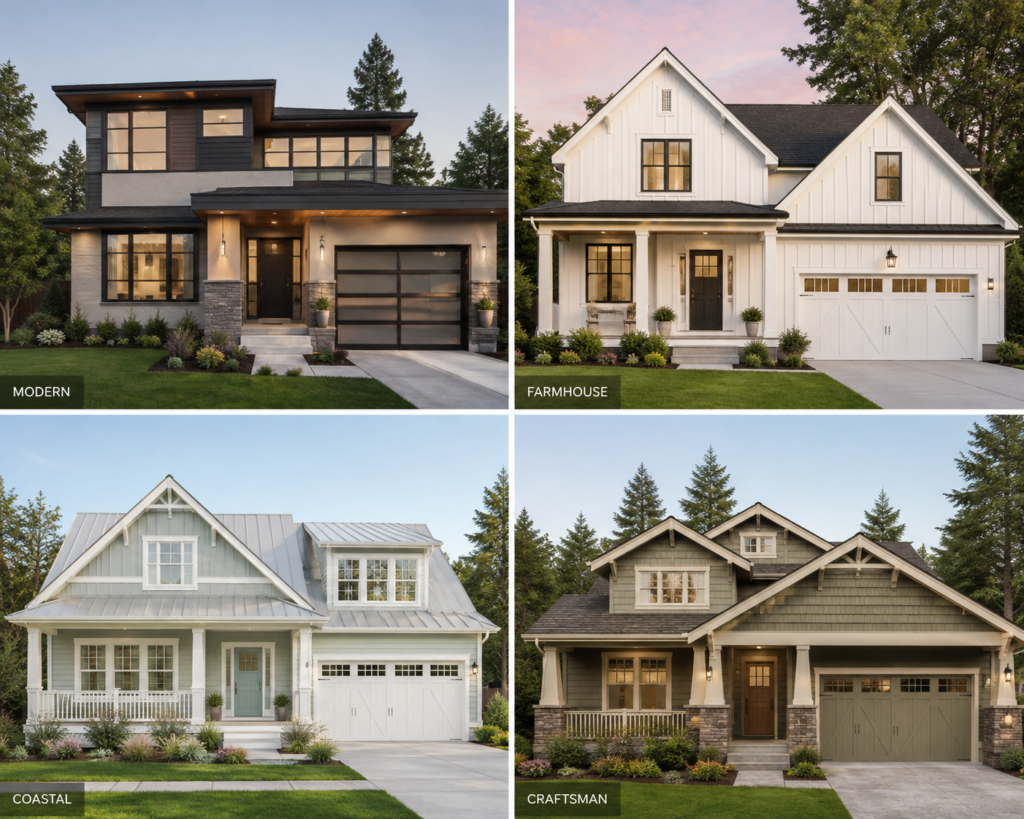
It’s tempting to settle on the first render that looks decent, but exterior styles like modern farmhouse, craftsman, and coastal can look dramatically different on the same house. Generate a handful of options before narrowing down, since it’s much easier to compare five renders than to compare one render against your imagination.
Use the Render as a Starting Point, Not a Final Answer
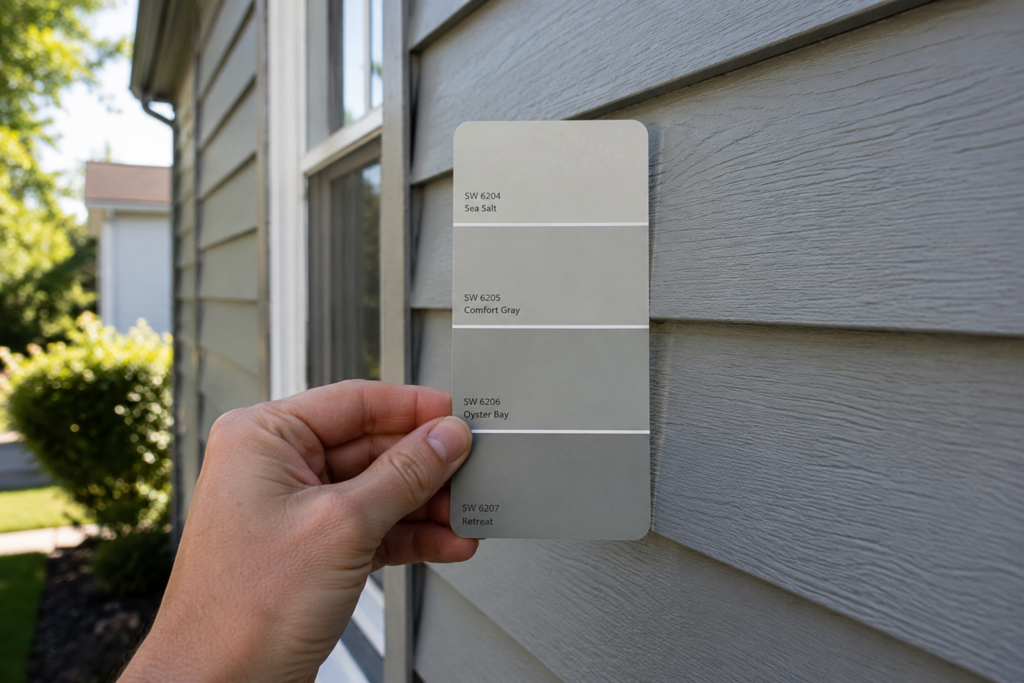
AI renders are excellent for direction and inspiration, but paint colors especially can look slightly different on a screen than in real daylight against your actual siding material. Always order a physical paint sample and test it on your house before committing to a full repaint.
Exterior Design Principles That Actually Hold Up
AI tools are great for visualizing options, but a good exterior design still follows a few timeless principles that matter regardless of which tool you use to plan it.
Keep Color Palettes to Three Tones
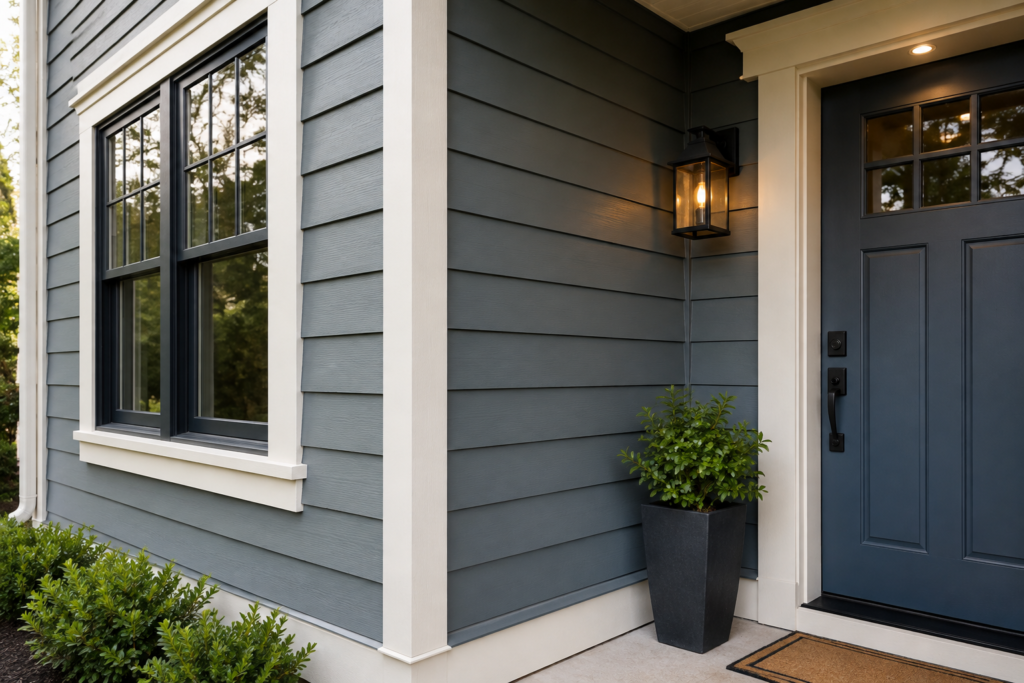
Most well-designed exteriors use a simple formula: one main color for the siding, a secondary trim color, and one accent color for the front door or shutters. Going beyond three tones tends to make a home look busy rather than intentional.
Match the Style to the Architecture
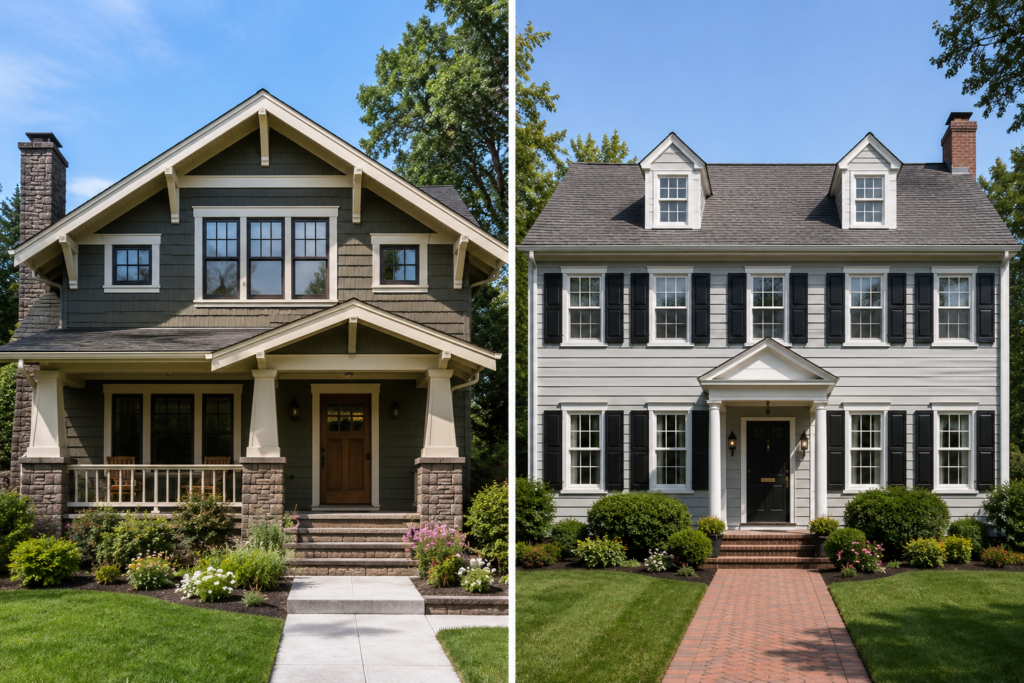
A style that looks stunning on a craftsman bungalow might look out of place on a colonial or ranch-style home. Before falling in love with a render, make sure the architectural style you’re testing genuinely fits your home’s existing rooflines and proportions, not just the era or region it comes from.
Don’t Ignore the Landscaping

A fresh coat of paint on a house surrounded by overgrown bushes and a cracked walkway won’t deliver the curb appeal boost you’re expecting. Simple landscaping updates, trimmed hedges, mulch, a clear path, and some porch lighting, make a bigger difference than most homeowners expect, and they’re inexpensive compared to a full repaint or re-side.
Lighting Changes Everything
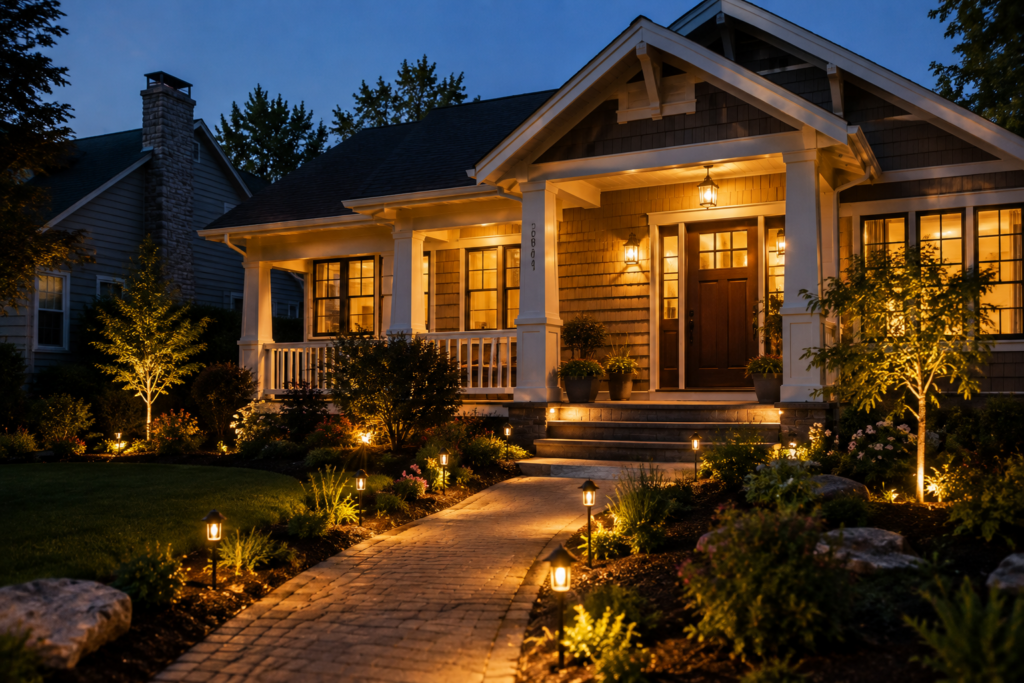
Exterior lighting is one of the most overlooked design elements. Well-placed path lights, a statement porch fixture, and uplighting on architectural features can make a home look finished and considered, day or night, for a relatively small investment.
Common Mistakes to Avoid When Redesigning Your Exterior
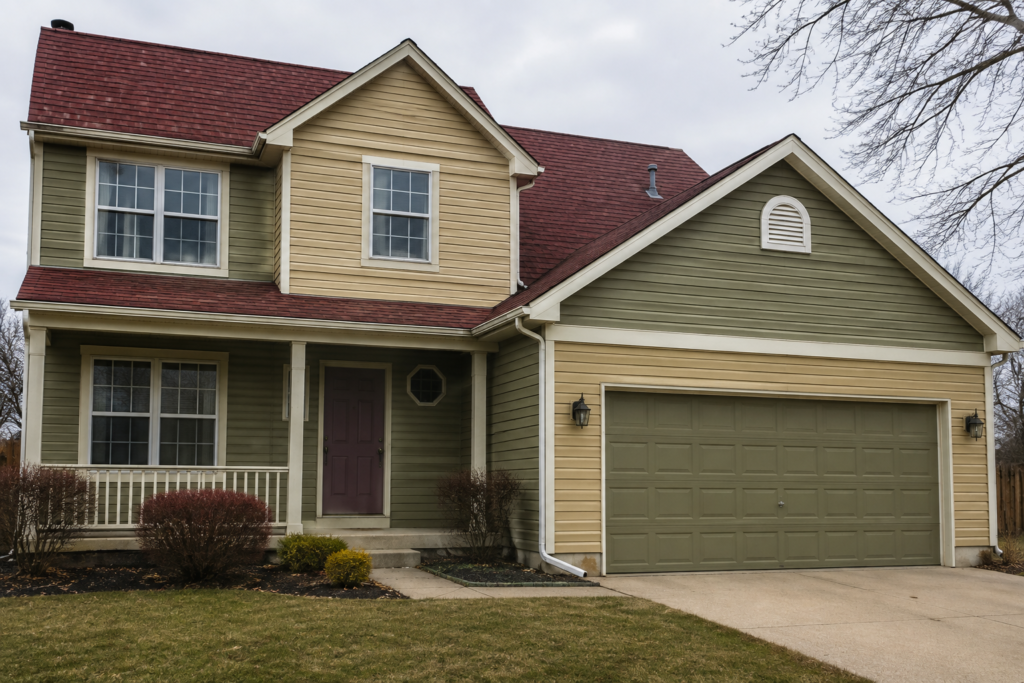
- Choosing a paint color from a tiny swatch instead of testing a large sample outdoors
- Ignoring your neighborhood’s overall style, which can affect resale value
- Overlooking the roof color when planning new siding or paint, since they need to work together
- Skipping HOA approval before starting a real renovation based on an AI render
- Focusing only on the front of the house and neglecting side and back elevations that are also visible from the street
From AI Render to Real Renovation
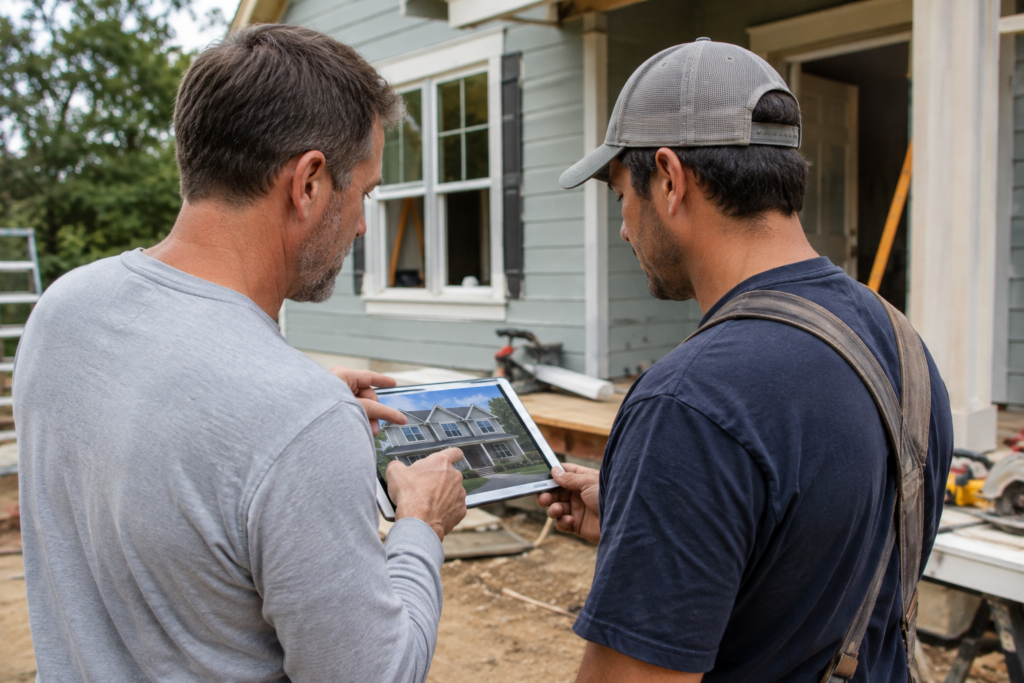
Once you’ve landed on a direction you love, the next step is turning that render into an actual project plan. Save your favorite renders and bring them to a contractor or paint store as a visual reference, since it’s much easier for a professional to quote and execute a project when they can see exactly what you’re imagining rather than trying to interpret a verbal description.
It’s also worth pricing out your project in phases if the full vision is a bigger investment than you can take on at once. Many homeowners start with paint and trim, then move on to landscaping, then finally tackle bigger items like a new front door or roof material down the line.
AI Renders vs. Hiring a Professional Designer
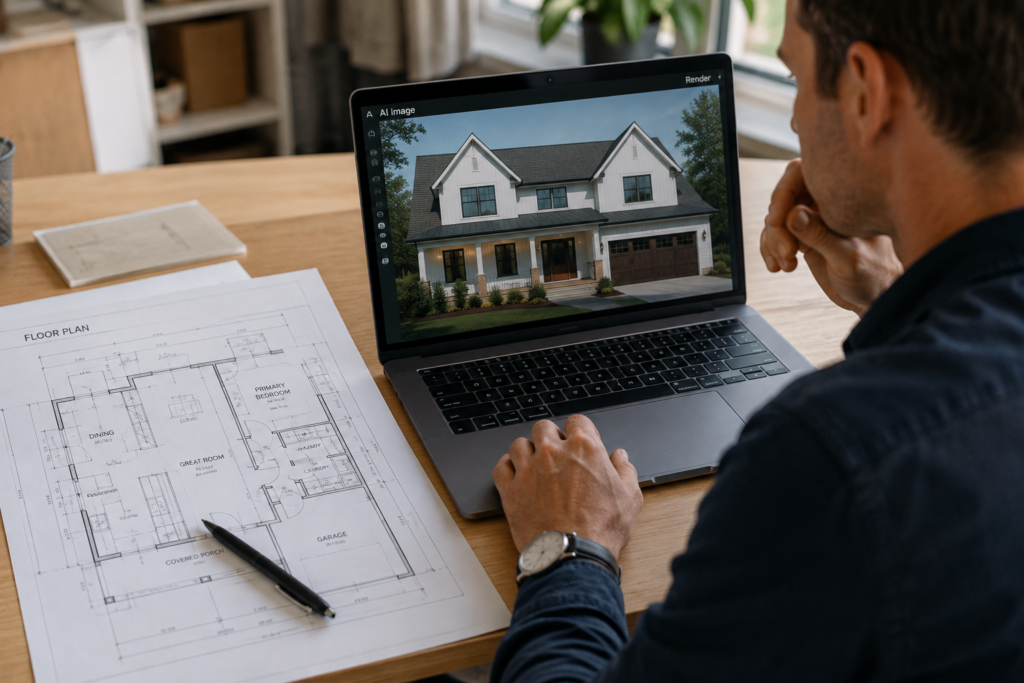
It’s fair to ask whether a free AI tool can really replace hiring an exterior designer, and the honest answer is that they serve different purposes. AI tools are excellent for early-stage exploration, comparing styles, colors, and material combinations quickly and at no cost. A professional designer or architect, on the other hand, brings expertise in structural feasibility, code compliance, and finer material and craftsmanship details that a render can’t fully capture.
A practical approach many homeowners use is starting with free AI tools to narrow down a general direction, then bringing those renders to a professional for a final, buildable plan. This hybrid approach can meaningfully cut down on paid design hours, since you’re walking in with a clear vision instead of starting the conversation from scratch.
Choosing Exterior Colors That Fit Your Region

Color trends that work well in one part of the country don’t always translate elsewhere, and it’s worth factoring in your local climate and surroundings when narrowing down AI-generated options. Coastal homes often lean into soft blues, whites, and weathered wood tones that complement sandy or ocean-adjacent landscapes. Homes in warmer, sun-heavy regions tend to hold up better with lighter colors that reflect heat and resist visible fading. In cooler, wooded regions, deeper greens, charcoals, and earthy browns tend to blend naturally with the surrounding tree line rather than standing out awkwardly against it.
When you’re testing AI renders, it’s a good idea to generate a few options that lean into your region’s typical palette alongside a couple of bolder, less expected choices. This gives you a realistic baseline to compare against before deciding whether to play it safe or make a statement.
Frequently Asked Questions
Are AI home exterior design tools actually free?
Many offer a genuinely free tier, usually a limited number of renders or downloads, before asking for payment on higher-resolution images or unlimited use. It’s worth trying two or three free tools before deciding if a paid tier is worth it for your project.
Can AI exterior design tools show accurate paint colors?
They’re a solid starting point for direction and style, but screen colors rarely match real paint exactly. Always confirm any exterior paint color with a physical sample tested on your actual siding before ordering paint for the full house.
Do I need a professional photo to use these tools?
No. A clear photo taken on a smartphone in good daylight is usually enough, as long as it’s a straight-on shot of the front of the house without heavy shadows or obstructions.
Final Thoughts
Free AI home exterior design tools have made it dramatically easier to explore what your house could look like before committing real money to a renovation. Use them to test bold ideas, compare styles side by side, and build confidence in a direction, then pair that vision with solid design fundamentals, a simple color palette, architecture-appropriate style, and thoughtful landscaping, to make sure the finished result holds up long after the render disappears from your screen.